Get Full Government Meeting Transcripts, Videos, & Alerts Forever!
Get email alerts on the Presidential Fitness topic
No spam. Unsubscribe anytime.
Donilon tells House Oversight he believed Biden's mental acuity remained strong and blames debate performance on fatigue and illness
Summary
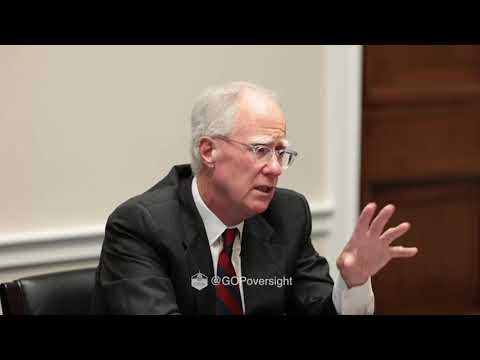
Michael Donilon, a longtime Biden adviser, told the House Oversight transcribed interview that he believed President Biden's "mental acuity was quite strong until the end of the presidency" and attributed the poor 2024 debate showing to travel fatigue, a cold and schedule intensity rather than cognitive decline.
Michael Donilon, a longtime adviser who worked on multiple Biden campaigns and in the White House, told the House Committee on Oversight and Accountability that he believed President Biden retained the capacity to serve and that the president's 2024 debate performance reflected situational factors rather than a decline in mental faculties.
Donilon said, "I believed his mental acuity was quite strong until the end of the presidency," adding that "I thought he was fully capable of the president" and that he had "no concern about his mental acuity" during debate preparation. He told the committee he had spent years working with Biden and said those years informed his judgment about the president's ability to perform the job.
Why it matters: The committee's inquiry centers on whether advisers or staff concealed medical or cognitive problems and whether any unauthorized actions were taken on the president's behalf. Donilon's testimony directly addresses the central factual question the committee posed: whether people who worked closely with the president observed a loss of capacity.
Donilon told committee members the 2024 debate's worst moments were driven by a combination of factors. He said the president had recently returned from extended foreign travel, was "tired," and appeared to be "fighting a cold," all of which affected his voice and stamina. Donilon said these concrete, temporary conditions, plus the ordinary difficulty incumbents face in a first general-election debate, help explain the debate outcome.
Direct quotes from the interview include Donilon's assessment that while "his voice was weaker than it was in 1981," he nonetheless "thought he was a very effective communicator" as president and that he had "no doubt for a single moment" about who was leading the country when in the White House.
The witness pushed back on media narratives claiming a long-term deterioration. When the committee read a New York Times sentence asserting Biden's acuity "deteriorated before the American public," Donilon replied: "I do disagree."
What Donilon said about the debate: He told the committee that debate preparation at Camp David emphasized substantive answers and that, in his view, camp may have insufficiently rehearsed stylistic elements (shorter, more disciplined responses). He said: "I don't believe lack of preparation was a factor," but added that the campaign's approach "spent maybe too much time on the very specific details of substantive answers, and not as much time on the stylistic part of the debate." He also said he thought press and pundit reaction was an "overreaction" relative to measured voter responses recorded in polling after the debate.
Ending: Donilon concluded that the best evidence he could offer was what he personally observed over years of working with Biden: that the president continued to be "quite engaged" and "in command" of the job. The committee transcript records Donilon's view that concerns about age were real and observable but that they did not amount, in his view, to inability to execute presidential duties.