Get Full Government Meeting Transcripts, Videos, & Alerts Forever!
Get email alerts on the Zba Orientation topic
No spam. Unsubscribe anytime.
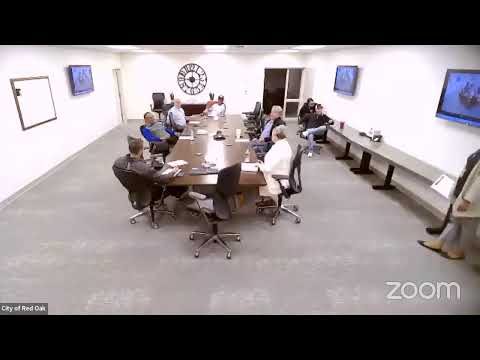
Red Oak ZBA holds orientation; city attorney outlines appeals, variances and public‑hearing rules
Summary
Courtney Morris of the city attorney’s office walked newly seated members through the Zoning Board of Adjustments’ powers and procedures, emphasizing that the board needs a four‑member quorum to hear cases, public comment rules, and limits on when variances may be granted.
Courtney Morris, of the city attorney’s office (filling in for City Attorney Bob Hager), opened an orientation for the Red Oak Zoning Board of Adjustments, telling members the body is authorized under the Texas Local Government Code and the city charter and that most of its work will come through public hearings on appeals and variance requests. "ZBA is the zoning board of adjustment," Morris said, and she emphasized that "you have to have 4 to even hear a case" on zoning matters because the board requires a supermajority for hearings and affirmative votes.
Morris reviewed the board’s jurisdiction: it may hear appeals of administrative determinations, decide special exceptions, grant variances where literal enforcement of an ordinance would cause an unnecessary hardship, and serve as the construction board of appeals for certain building‑code interpretations. She said other matters the board can hear include licensing appeals for wrecking/junk/salvage yards, boarding‑home license disputes, stormwater (MS4) compliance orders and sign regulation variances.
On public hearings, Morris told members the purpose is to allow public comment and cautioned that "public comment is just that — you do not respond to public comment." She urged members to avoid personal attacks and to keep discussion objective during deliberations so administrative decisions do not provide unnecessary grounds for judicial appeals. Morris also noted timing and notice requirements for appeals: appellants generally have 15 days to file and staff typically aims to set hearings within a reasonable time (the presentation referenced 60 days as a common target).
The presentation covered the legal standard for variances: relief must address a parcel‑specific hardship that is not self‑imposed, must not injure adjacent conforming uses, and must be in keeping with the spirit and purpose of the zoning ordinance. Morris warned that variances are "not supposed to be easy to get" and are a limited remedy, not a substitute for amending the zoning code.
Morris reviewed how the board should treat nonconforming uses, including when reconstruction after damage may be permitted and when staff can authorize repairs versus when the board must act. She also explained statutory guidance on financial hardship for existing structures, noting a cost‑of‑compliance threshold discussed in state law: when compliance costs would exceed 50% of the most recent appraised value, finance may factor into a variance consideration.
Finally, Morris walked members through open‑meetings and public‑records obligations, executive‑session limits, and communications guidance: "Don't talk about the business of this board on social media" beyond basic meeting notices, and remember that personal emails and texts about board business may be public records.
The orientation concluded with questions from members about examples (such as roadway‑widening impacts on setbacks and parking for strip centers) and how variances apply on multi‑tenant properties.
The board received the presentation and moved on to organizational and administrative business.