
Richland 2 committee recommends flexible placement windows and tighter reintegration supports for students in alternative programs
Get AI-powered insights, summaries, and transcripts
Sign Up Free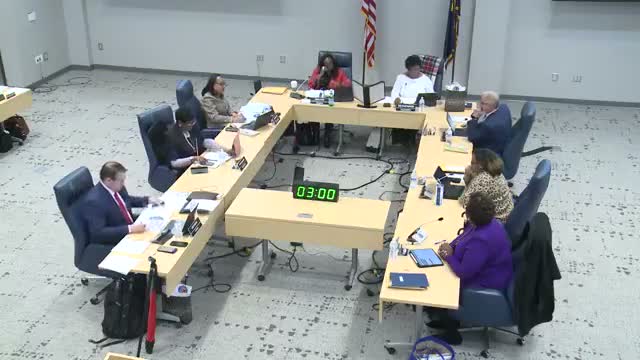
Summary
The district's alternative pathways committee presented dashboard data showing year-to-year changes in alternative placements and recommended flexible placement windows (e.g., 45–90 days), improved transition processes and stronger reintegration supports to reduce exclusionary outcomes and support credit completion.
The Richland School District Two alternative pathways committee presented data and recommendations to trustees at the Feb. 24 work session, urging more flexible placement language, improvements to transition procedures and stronger supports to help students reintegrate successfully to their home schools.
Presenters summarized dashboard data showing shifts from last year: an approximately 23% elementary increase and a 42% middle-school increase from quarter 1 to quarter 2 last year (with middle-school increases reduced to 28% this year), and a 13% high-school increase last year that is now a 10% decrease. Committee members said the dashboard and board brief include more granular data, including whether placements involve repeat or new offenders.
Committee members and Dr. Elkins Scott said fixed wording such as “45 days” has sometimes been interpreted as a hard limit that does not account for academic cycles. The presenters recommended allowing a range (for example, 45 to 90 days) so that placement length can align with grading cycles and a student’s readiness to return. They also emphasized the importance of wraparound supports, bus-driver involvement, behavior intervention agreements and spot checks to ensure academic continuity while a student is placed out of their home school.
Board members asked process questions about how hearing-officer timelines (30/60/90 probation recommendations) interact with board decisions and whether the hearing officer or the board determines final placement length. Presenters said they will provide referral-language documents and one-pagers for board use and invited trustees to participate in field visits to study alternative-program models in other districts.
No formal policy vote occurred during the presentation; the committee said it will continue refining language and procedures for board consideration.