Get Full Government Meeting Transcripts, Videos, & Alerts Forever!
Get email alerts on the Board Training topic
No spam. Unsubscribe anytime.
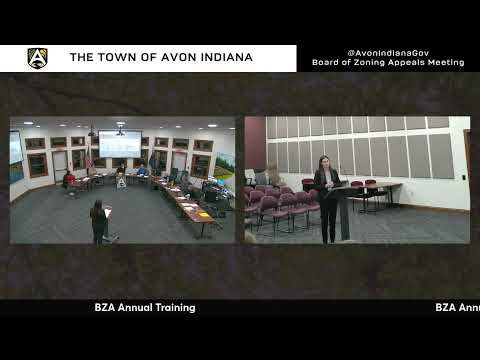
Avon BZA receives annual training on findings, variance standards and special exceptions
Summary
Avon’s Board of Zoning Appeals completed its yearly training covering required specificity in findings of fact, the difference between variance types, special exceptions and conflict/recusal rules, referencing recent cases including Beaver Gravel and a Supreme Court ruling on BZA authority.
During the Jan. 20 meeting, Avon’s Board of Zoning Appeals received annual training from the board attorney/trainer focused on how to write specific findings of fact, distinguish variance types, apply the strict "unnecessary hardship" standard and evaluate special exceptions.
The trainer emphasized that findings must explain why the board reached a conclusion so a reviewing court can follow the record: "If one of your decisions were appealed, the court reviews it, they need to know why you made that decision," the presenter said. The presentation reviewed case law, including the Beaver Gravel decision about unnecessary‑hardship standards and a Supreme Court ruling that the BZA does not have authority to revoke its prior approvals.
Training materials highlighted that variance of development standards (practical difficulty) is a lower standard than variance of use (unnecessary hardship), and gave examples of the evidence the board should seek at hearings — traffic and drainage analyses for special exceptions, and facts tied to each variance factor. The trainer also reminded members to recuse themselves where direct or indirect financial interest or inability to be objective exists.
Board members asked questions about when a variance of use should instead go to a full rezone, how to record fact‑based reasons on the record, and how conditions run with the land. The session closed with procedural reminders and an invitation to raise questions with staff between meetings.