Lifetime Citizen Portal Access — AI Briefings, Alerts & Unlimited Follows
Senate Banking Committee debates bills to curb politically driven “debanking” and expand banking for state-legal cannabis businesses
Loading...
Summary
Lawmakers and witnesses at a Senate Banking Committee hearing debated the Ensuring Fair Access to Banking Act of 2025 and the SAFER Banking Act, focusing on whether banks or regulators are driving "debanking," how to limit use of "reputational risk," and whether statutory safe harbors are needed for state-legal cannabis markets.
The Senate Committee on Banking, Housing, and Urban Affairs convened a hearing to examine allegations that banks and regulators have cut off lawful customers for political or ideological reasons and to review a discussion draft titled the Ensuring Fair Access to Banking Act of 2025.
Chairman Tillis opened the hearing by saying the problem occurs "when access to these services are denied, not because of risk or creditworthiness or illegal activity, but because of politics, religious beliefs, or involvement in a legal but disavowed industry," and he introduced a draft bill built on three pillars: a federal fair-access standard, repeal of "reputational risk" in supervision through provisions modeled on the FIRM Act, and reforms to increase transparency and congressional oversight of examiners.
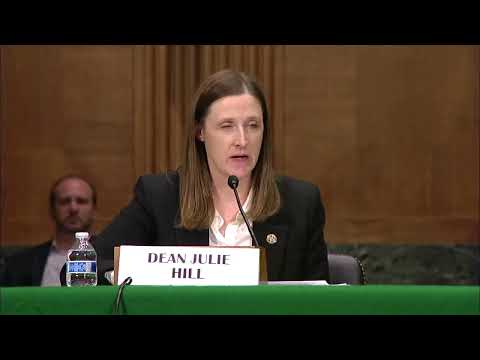
Dean Julie Hill of the University of Wyoming College of Law, a longtime scholar of banking regulation, told the committee that debanking threatens access to basic financial services and undercuts public trust in supervisors. Hill described two troubling features of current supervision: broad discretionary tools such as "reputational risk" and management/CRA-style supervisory ratings that can be used to influence bank behavior, and the secrecy of supervisory actions that makes it difficult to verify whether regulators or banks are responsible for account closures. "Reputational risk becomes troublesome when it acts all on its own," she said, and argued Congress should act to curb that discretion while preserving legitimate safety- and soundness-based decisionmaking.
Witnesses representing affected industries pressed related points. Miss Gammon described how divestment by a Bank of the West affiliate and subsequent pressure harmed small independent oil and gas producers, raising costs and constraining credit. Tyler Klimas, principal of Leaf Street Strategies and a former Nevada cannabis regulator, described the SAFER Banking Act as a targeted measure to bring banks into state-legal cannabis markets, reduce cash-intensive operations, and improve transparency for public safety. Klimas said rescheduling cannabis to Schedule III would not eliminate the banking risk because the underlying federal guidance and the lack of FDA approval would still leave uncertainty for financial institutions.
Committee members pressed witnesses on technical and policy trade-offs. Ranking Member Senator Cortez Masto emphasized consumer-protection capacity and said she intends legislation to restore CFPB funding; Senator Kramer asked to place OCC preliminary findings on debanking in the record and raised whether penalties or an enforcement mechanism should be part of a fair-access law. Dean Hill and other witnesses agreed Congress needs oversight tools, including selective access to confidential supervisory information, but warned that drafting a uniform federal standard is difficult given the diversity of banks and state regulatory regimes.
No formal votes or enactments occurred at the hearing. The chair asked senators to submit questions for the record within a week and gave witnesses 45 days to respond. Senators and witnesses asked that the committee continue line-by-line work on the discussion draft and on SAFER-related proposals.
What’s next: the committee accepted written submissions for the record (including letters supporting the SAFER Act from the Independent Community Bankers of America, the American Bankers Association, and the US Cannabis Roundtable) and set procedural deadlines; further markup or future hearings were discussed but not scheduled at the hearing.