Lawmakers press MDH on assisted-living manager licensing and board funding as FY27 allowance rises
Loading...
Summary
At a Maryland Health and Human Services Subcommittee hearing, DLS and MDH discussed a $51 million FY27 allowance for health professional boards, a new assisted-living manager licensure that will require roughly 1,628 licenses, and related fund transfers and staffing needs.
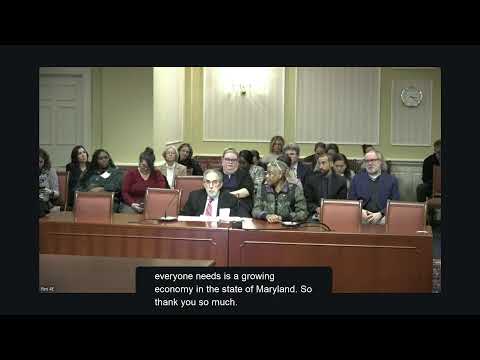
The Health and Human Services Subcommittee examined the Maryland Department of Health(MDH) proposal for the health professional boards and commissions on Monday, focusing on a new assisted-living manager (ALM) licensure and how boards will handle increased licensing volumes.
Victoria Martinez, budget analyst with the Department of Legislative Services, told the panel the FY27 allowance for health professional boards increases by $4,400,000 to $51,000,000 and is primarily funded by special funds generated through licensing fees. The analysis flagged canceled funds in FY25, personnel and software spending rises in FY27, and recommended a narrative asking boards to report complaint-rate data in annual "Managing for Results" submissions.
Clint Hackett, MDH deputy secretary for operations, said the State Board of Long Term Care Administrators estimates it will issue about 1,628 ALM licenses in FY27 after implementation of House Bill 874 and related 2024 Acts. "The initial application portal for ALM is anticipated to go live on 04/15/2026," Hackett said, and the board will accept attestation from experienced ALMs for most licensure requirements, a step expected to "significantly expedite staff review and license issuance."
Committee members pressed MDH on whether the five regular positions included in the FY27 budget will be sufficient to process a projected licensing increase described during the hearing as a roughly 332% jump. A board representative told the panel the previous executive director had modeled staffing on a higher estimate and requested three mission-critical positions; MDH said those positions were approved in fiscal 2025 and that the department is actively hiring to reach five operational staff, including an investigator.
Lawmakers also highlighted DLS and OPEGA findings about inconsistencies in how timeliness is measured across boards. Martinez noted that the DLS performance metric often counts time from fee payment rather than from the initial application submission, which "doesn't reflect the entire processing time for the applicant." Hackett said MDH will consult board directors to develop more consistent measurements.
The DLS analysis also points to planned board fund transfers: $2,000,000 from the board of physicians and $500,000 from the board of professional counselors and therapists; DLS asked whether those transfers would leave boards with sufficient reserves. MDH described a pending enterprise licensing and regulatory management system (ELRMS) intended to consolidate board platforms and reduce long-term maintenance costs, and said it will provide more detail on HR impacts and fund transfer effects.
The subcommittee did not take formal action at the hearing. DLS recommended committee narrative requesting additional reporting; MDH committed to follow up with more precise staffing and fund-impact information.
The panel moves next to the Office of Health Care Quality and the Department of Housing and Community Development in the same hearing record.