Committee reviews six amendments to SB 5280 to add consumer protections for virtual-currency kiosks
Loading...
Summary
Committee staff reviewed six amendments to SB 5280, which would add requirements for virtual-currency kiosk operators including a potential 72-hour hold on a new customer's first transaction, revised daily transaction limits, disclosure and receipt requirements, mandatory customer service hours, use of blockchain analytics, and conditional refund provisions for fraud. No final vote on SB 5280 was recorded in the transcript.
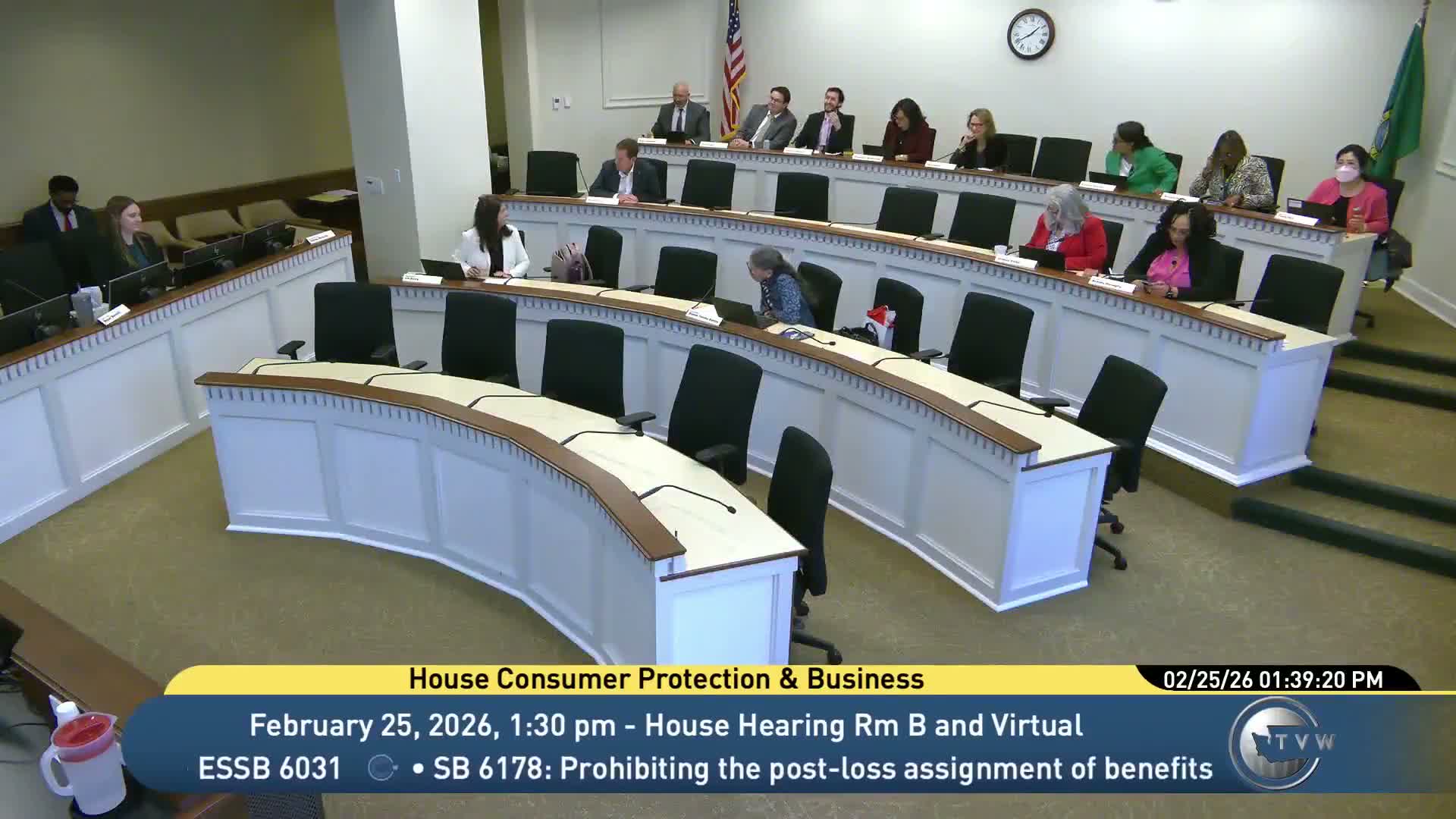
Committee staff on Feb. 25 reviewed six proposed amendments to engrossed Senate Bill 52 80, which would expand consumer-protection requirements for virtual-currency kiosks under the Uniform Money Services Act.
Staff explained the first amendment would require a licensee to hold the first transaction of a new customer for 72 hours and allow the customer to cancel and receive a full refund during that hold. Another proposed amendment would replace the bill’s $2,000 daily transaction limit with a tiered approach: $2,500 for customers with less than 72 hours of relationship history and $10,500 for existing customers with 72 hours or more. Other amendments would remove a statutory cap on fees (so fees could be set by the operator), require an explicit disclosure that virtual currency is not legal tender and is not government-backed or insured, require a paper receipt with specified details, mandate live customer service Monday–Friday 8 a.m.–10 p.m. Pacific time with a toll-free number on the kiosk, and require operators to use blockchain-analytics tools to assist in detecting suspicious activity. A refund amendment would allow a full refund (including fees) if the customer was fraudulently induced, provided the customer reported to law enforcement and the licensee within 30 days and supplied a police report.
Staff told members these amendments could generally be reconciled but members noted a potential policy tension between raising transaction limits and removing fee caps; Representative Santos asked whether any of the amendments conflict, and staff said they appeared reconcilable although policy tradeoffs exist. No committee vote on SB 5280 was recorded in the provided transcript.
Why it matters: The amendments collectively aim to strengthen consumer protections for virtual-currency kiosk users by limiting rapid large transfers, increasing disclosure and refund rights, and requiring operator controls and customer service.
What happens next: The committee will consider these amendments in caucus or at the committee’s next action; no recorded final vote on SB 5280 appears in the transcript provided.