
State Government committee advances 10 bills before cutoff; student-survey records exemption draws debate
Get AI-powered insights, summaries, and transcripts
Subscribe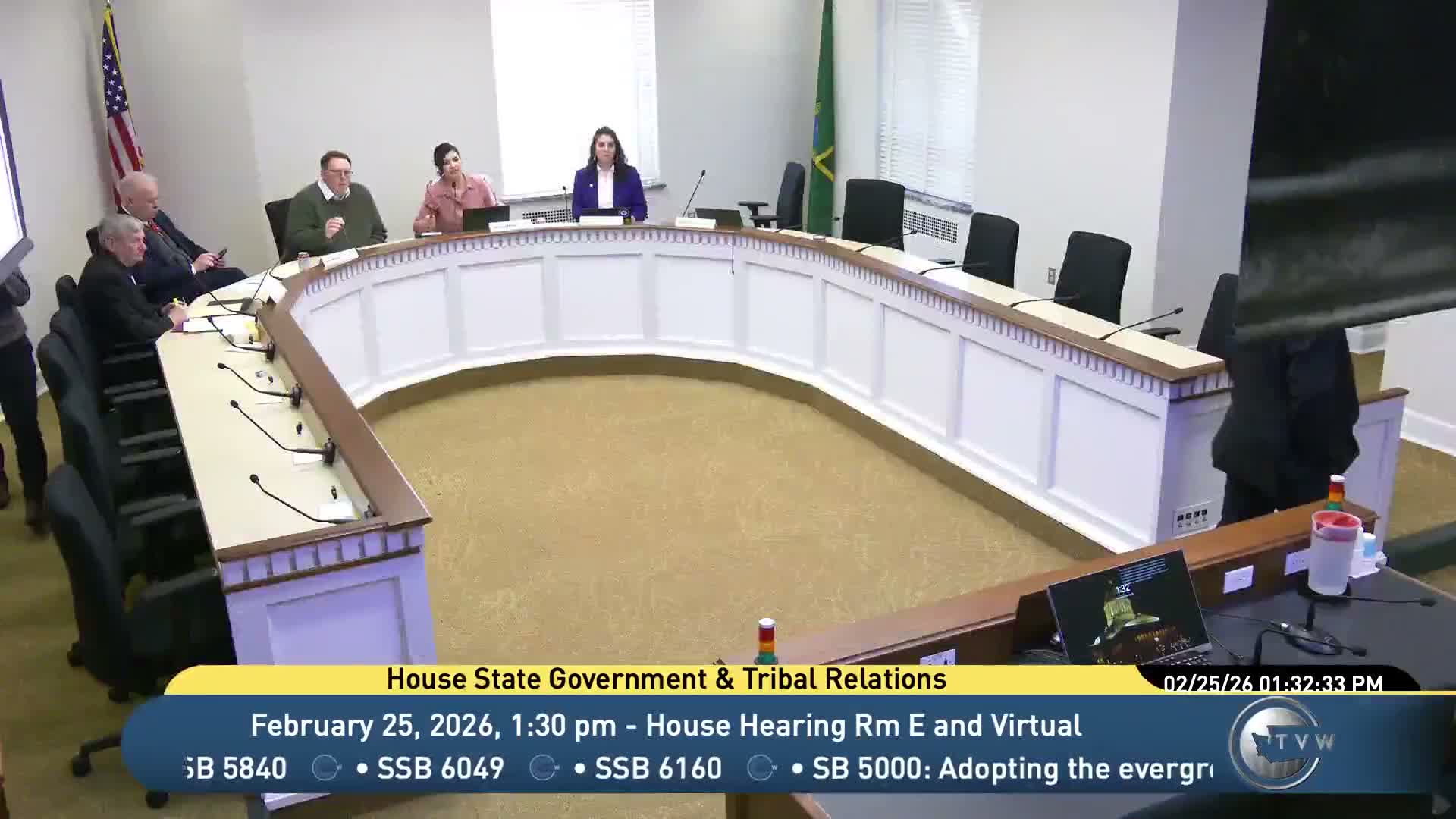
Summary
The committee reported out 10 bills with due-pass recommendations before policy cutoff. Lawmakers sparred over a proposed public-records exemption for student health-survey responses, restored several agency reports by amendment, and debated limits on campaign-reporting timelines and leadership-board fundraising transparency.
The State Government Bridal Relations Committee met for its final session before policy cutoff and moved 10 bills out of committee, advancing measures on campaign finance reporting, agency report suppression and restoration, cultural-day recognition, veterans’ benefits and other matters.
Chair (not identified by name in the transcript) opened the meeting and listed the bills scheduled for executive action. The committee handled a mix of voice votes and roll-call votes and adopted several sponsor amendments aimed at narrowing or restoring reporting requirements.
Why it matters: Several bills affect transparency rules for state agencies and campaigns, and one high-profile item would change public-records access to student responses on the Healthy Youth Survey. Lawmakers debated the tradeoff between encouraging candid survey responses and preserving public access to records.
On the Healthy Youth Survey exemption, Representative Walsh moved amendment Omni 383 to remove individual student responses from the bill’s proposed exemption to the Public Records Act so those responses could remain subject to public records requests. "This survey is highly controversial," Walsh said, arguing that removing the exemption would preserve public access to results that may contain personal information. Supporters of confidentiality, including the bill’s sponsor, said the survey is voluntary and anonymized and that releasing results risks identifying participants and could chill participation. The amendment failed on a voice vote; substitute Senate Bill 60 49 was reported out of committee with a due-pass recommendation (5 ayes, 2 nays).
On government reporting, members debated Substitute Senate Bill 61 60, which would eliminate certain recurring agency reports. Vice Chair Farber and Representative Walsh sparred over restoring specific reports; Walsh urged keeping information such as Department of Ecology in-stream-flow reporting and revenue data tied to clean-vehicle exemptions. A package of amendments to reinstate a set of reports was adopted and the bill was reported out as amended with a due-pass-as-amended recommendation (7 ayes, 0 nays).
Campaign finance adjustments in Substitute Senate Bill 58 40 drew technical amendments from Representative Walsh. One amendment removing a new deadline was adopted; another to expand a 48-hour correction window to 72 hours did not pass after members voiced concerns that extra time could delay disclosure. The bill was reported out as amended with a due-pass recommendation (7 ayes, 0 nays).
Representative Farvar moved a joint memorial (Engrossed Substitute Senate Joint Memorial 80 14) seeking support for a federal independent investigation into the death of a Washington resident abroad. Farvar cited testimony from affected families and urged members to send a bipartisan message to the federal government. The memorial was reported out with a due-pass recommendation (5 ayes, 2 nays).
Representative Farvar also moved bills recognizing cultural celebrations (Senate Bill 60 44) and improvements to the State Capitol campus (Senate Bill 63 13). Senate Bill 60 44, which would legislatively recognize Diwali and related observances, passed by voice vote (7 ayes, 0 nays); the campus-improvement bill passed on a split roll call (reported as 4 ayes, 3 nays), with Representative Walsh warning that solicitation of private contributions could be a slippery slope and that maintenance should be addressed through the capital budget.
On the question of allowing the Washington State Leadership Board to solicit gifts and grants (Substitute Senate Bill 58 25), Representative Walsh offered an amendment requiring periodic reporting on funds raised and spent to increase transparency. The amendment was not adopted; the underlying bill was reported out with a due-pass recommendation (6 ayes, 1 nay).
The committee observed a brief recess to manage logistics, completed the remaining bills on its list (including Senate Bill 5,000 and Senate Bill 53,25), and adjourned. Chair thanked staff and caucus aides for their work; members expect a work session next week.
What’s next: All reported bills proceed to the next step in the legislative process; the transcript records committee recommendations (due-pass or due-pass-as-amended) but does not indicate final floor action or enactment. The committee plans a work session next week ahead of subsequent deadlines.
Quote highlights: "This survey is highly controversial," (Representative Walsh) on the Healthy Youth Survey exemption; "I move that Engrossed Substitute Senate Joint Memorial 80 14 be reported out of committee with a due pass recommendation," (Representative Farvar) when moving the memorial.
Ending: After finalizing votes and thanking staff, the chair adjourned the committee and noted members would have an hour back following adjournment.