
Committee hears broad testimony supporting phased restoration of state funding for compensation and central services
Get AI-powered insights, summaries, and transcripts
Subscribe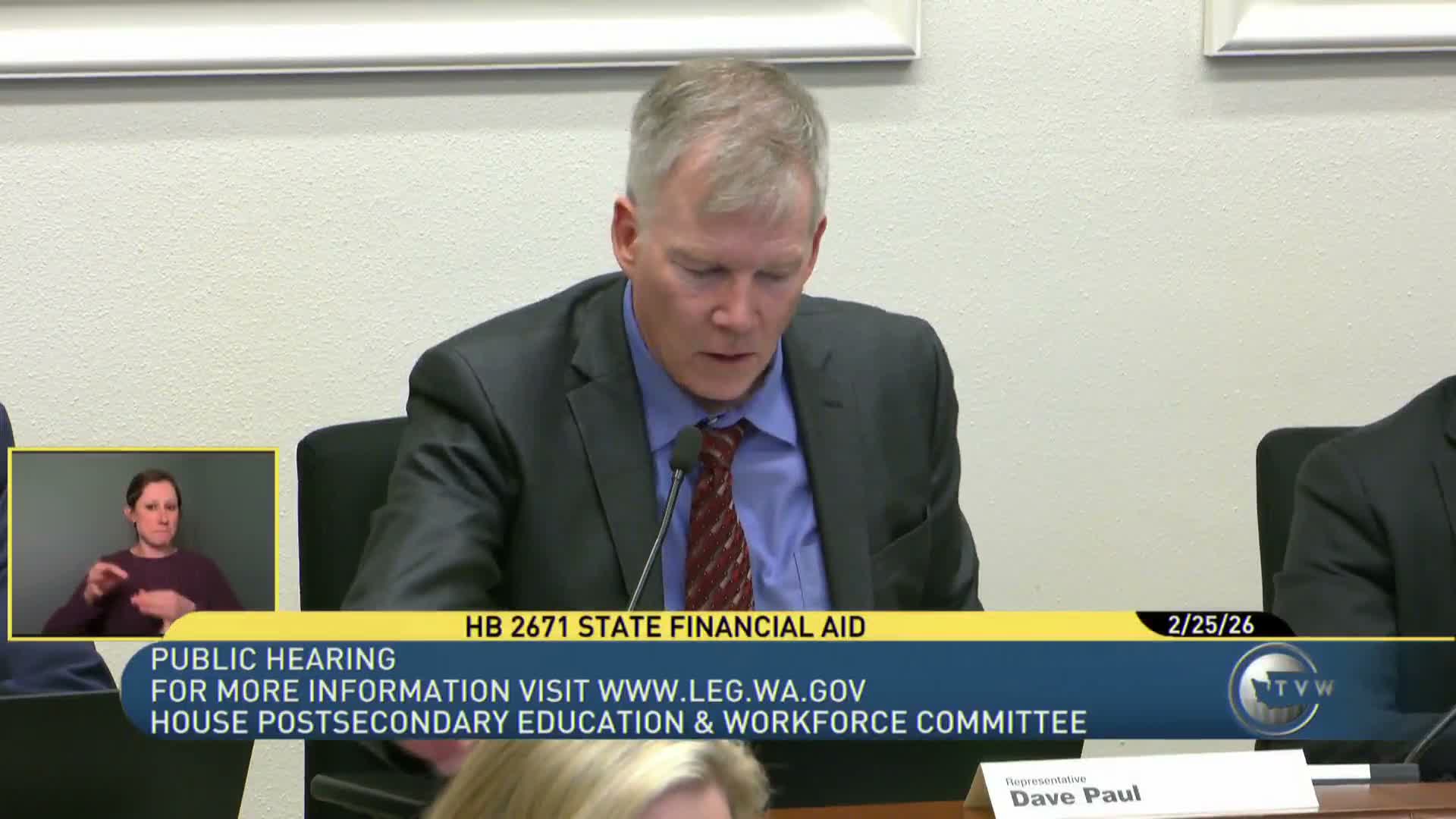
Summary
HB 2617 would begin reverting increases for employee compensation and central services to 2023‑25 funding levels starting in the 2029‑31 biennium, with biennial 10% state increases thereafter until fully state‑funded; testimony from university presidents, faculty and unions described widespread cuts to student services, program reductions and staffing impacts caused by the 'fund split'.
House Bill 2617 — described in testimony as a remedy to the so‑called 'fund split' — drew the committee’s most extensive testimony on Feb. 25.
Committee staff explained that the fund split is a budgeting practice (not statutory) that attributes a portion of compensation and central‑services increases to tuition rather than state funds. HB 2617 would require that, beginning in the 2029‑31 biennium, the state fund the level of compensation and central services paid in 2023‑25 and then increase the state share by 10% of the remaining gap every biennium until fully state‑funded. The bill also directs the Washington State Institute for Public Policy (WSIPP) to study and report on essential student‑services standards.
Representative Pollet, sponsor of the fund‑split restoration proposal, told the committee that the practice shifts costs onto tuition and causes repeated cuts across institutions that undermine student access and affordability. Witnesses across campuses gave detailed examples of harm: Central, EWU, UW, WSU, Western and Evergreen representatives described cuts to advising, tutoring, counseling, nursing program pauses or closures, deferred maintenance, and layoffs. Several speakers said the University of Washington’s state share of the fund‑split had fallen to roughly 42% (with additional cuts dropping some calculations lower), and Central reported a fund‑split shortfall exceeding $1 million annually for planned COLAs.
Western witnesses said the fund‑split has reduced the state’s share for Western from roughly 70% to 51% in the prior budget step, contributing to program and staff reductions. Western’s president and trustees pressed for both parity for Western and a transparent, durable funding framework for higher education. System leaders, faculty unions and AFT and WEA representatives called for restoring state responsibility for COLAs and central services, arguing that shifting those predictable costs to tuition destabilizes campus budgets and students.
Multiple witnesses supported the bill’s two‑pronged approach: near‑term parity and a longer‑term study to define essential services. Some suggested broader statutory fixes or enrollment‑based formulas to create predictable funding. The committee did not take a vote on HB 2617 at the meeting.