
Energy secretary defends deals to add power capacity for data centers, rejects proposed moratorium
Get AI-powered insights, summaries, and transcripts
Subscribe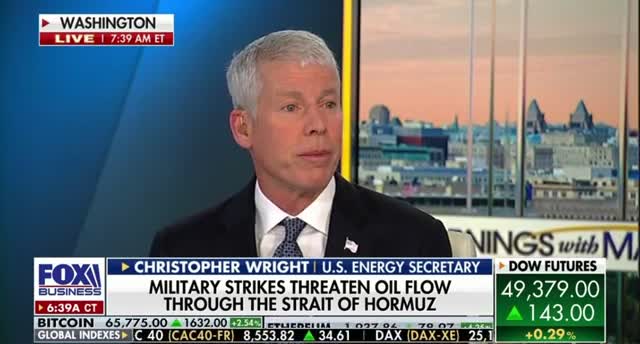
Summary
Energy Secretary Christopher Wright said the administration brokered deals with data-center operators to add electricity capacity and keep coal generation online to avoid blackouts; an on-air guest urged a moratorium on data centers and Wright called the idea 'wrong on both points.'
Energy Secretary Christopher Wright told a television interviewer that the administration has been negotiating with large data-center operators—"hyperscalers"—to add power capacity and to prevent electricity prices from spiking as data centers expand. "He's making it easy to add power capacity and doing deals with the hyperscalers," Wright said, describing the administration’s approach as intended to support U.S. leadership in artificial intelligence while limiting price increases for consumers.
Wright cited a Department of Energy study (as he described it on air) and said the administration "kept 17 gigawatts of coal online last year that would have been gone," framing the decision as necessary to avoid blackouts during a severe cold weather event. He argued the policy preserved reliability and protected vulnerable households during extreme conditions.
A guest commentator proposed a moratorium on new data centers to slow the trend of buildouts that the guest said were "raising electric bills for people in the communities." The commentator said the process should be slowed and communities given time to adapt; the host framed that view as coming from Senator Bernie Sanders. Wright rebutted: "Bernie has it wrong on both points... The country that leads an AI is gonna be the leading power in the coming century," and he defended the administration’s approach as necessary for economic and national-security reasons.
The interview included conflicting claims about environmental benefits: a commentator asserted American natural gas is "4040% cleaner than Russian natural gas." That figure appears as spoken in the transcript but was not supported with a data source during the segment.
No binding moratorium, new regulation, or local permitting action was announced during the interview. The exchange framed the tension between local electricity-price concerns and a national push to expand computing capacity to support AI and economic competitiveness.