
Neighbors press county and city on speeding, photo radar and 88th/94th signal plan
Get AI-powered insights, summaries, and transcripts
Subscribe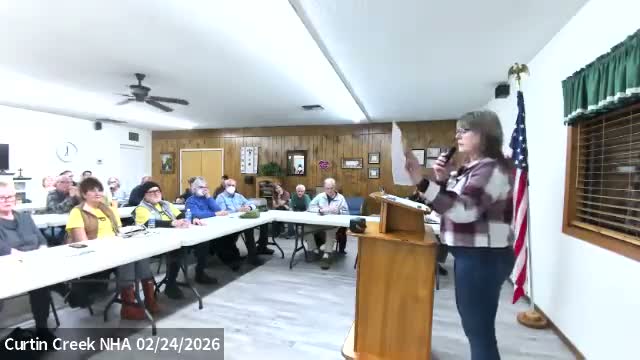
Summary
Residents pressed Clark County officials about speeding and cut‑through traffic, asked whether photo‑radar or speed bumps could be restored, and heard City of Vancouver traffic staff say the 88th/94th intersection warrants a signal; officials said mitigation for a city development impacting a county road would be the developer’s responsibility.
Neighborhood residents used the meeting to press officials about speeding, dangerous cut‑throughs and the jurisdictional confusion at a busy intersection.
Multiple residents described repeated high speeds on arterials and residential cut‑throughs, and asked whether the county could reinstate photo‑enforcement or invest in traffic calming. One resident said the stretch between 72nd and 119th is “like an Autobahn” and asked for a plan to reduce speed.
Sheriff John Porch said photo‑enforcement reduces speeds but requires staff to operate and maintain, and that patrol-based enforcement offers only a temporary reduction. “I’m not against that, but we don’t have the personnel because you have to run that program,” he said.
David Jardine, traffic‑engineering section manager for the City of Vancouver, told residents that Kittelson & Associates performed the city’s traffic study and that the intersection of 88th and 94th warrants a signalized intersection. “Their current plan, as I understand it, is they are planning a signalized intersection at that location,” Jardine said. He added the city is still evaluating whether a signal or a roundabout would be the best mitigation and that, where a city development impacts a county road, the developer must propose mitigation to offset traffic impacts.
Meeting organizers distributed a Neighborhood Traffic Management Program flyer for local streets (25 mph and under), said the application deadline is the end of next month and said roughly $250,000 was available to divide among neighborhoods for speed bumps, curb cutouts and other measures.
Officials agreed to circulate traffic studies and follow up: Jardine offered to send the Auslund subdivision traffic study to Marilee for distribution, and county staff encouraged residents to file formal public‑works requests so the issues can be logged and prioritized.