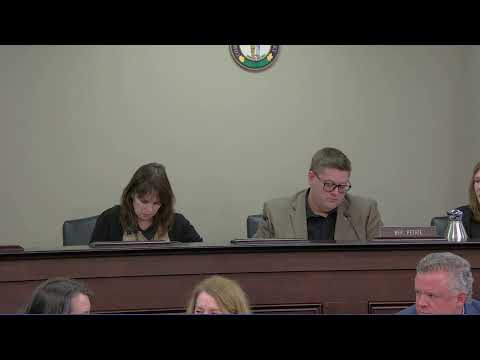
House committee advances Medicaid reform bill after hours of testimony on cost-sharing and access
Get AI-powered insights, summaries, and transcripts
SubscribeSummary
The House Appropriations and Revenue Committee voted 14–4 (two passes) to report House Bill 2, a wide-ranging Medicaid reform bill that sponsors say increases program integrity and transparency but critics say could reduce access through new redeterminations and co-pays.
FRANKFORT — The Kentucky House Appropriations and Revenue Committee on Tuesday advanced House Bill 2, the Kentucky Medicaid Reform Act, after hours of sponsor explanation and emotional public testimony about how proposed eligibility and cost-sharing rules would affect patients and providers.
Sponsor Rep. Ken Fleming, R-48, told the committee the bill responds to rapid growth in Medicaid spending and aims to tighten program integrity, expand audits, and improve contract enforcement for managed care organizations. Fleming said the measure addresses community engagement and eligibility verification required by recent federal changes and would, among other measures, allow cost sharing for some services, strengthen data matches and redeterminations, and codify contract terms and penalties for MCO noncompliance.
"We have to look at how we're gonna sustain this program," Fleming said, citing what he described as a large growth in the Medicaid budget and saying the bill creates new oversight tools including an MCO compliance fund and a web-based health-care dashboard.
Supporters of parts of the bill — including greater transparency, dental access, and performance incentives — told the committee they backed measures to improve oversight. But witnesses from health and advocacy groups and transportation providers warned the bill as drafted goes beyond federal requirements and will harm access for low-income and medically complex Kentuckians.
Emily Beauregard, executive director of Kentucky Voices for Health, said HB 2 "incorporates many recommendations from the Medicaid Oversight and Advisory Board" but cautioned that the bill "goes further than Federal law requires" on some changes and that proposed co-pays could fall hardest on people with serious illnesses. She offered a concrete example: a family of four could face up to $1,650 in co-pays in a year for cancer-related services under the bill as written.
"These are important questions to consider and there's no need to rush," Beauregard said, urging the committee to align state implementation with forthcoming federal guidance and to monitor impacts on enrollment and health outcomes.
Jason Dunn, a private citizen who spent decades administering public-assistance eligibility, warned that expanded data matches and additional full redeterminations could cause unnecessary churn and coverage loss because data sources such as PARIS are sometimes months out of date. "These sections of House Bill 2 miss this balance, valuing program integrity at the expense of access to otherwise eligible Kentuckians," he said.
Rural transportation providers also raised alarms about payment changes. Jim Lacefield, part owner of Venture Cabs in Corbin, said raising a proposed medical-loss-ratio target to 90 percent (with limited opportunity to earn it back) and changing NEMT payment structures could force small brokers to close, causing service gaps for dialysis and other specialist care.
Several legislators pressed the sponsor on when and how notices of ineligibility would be issued, whether beneficiaries would have an opportunity to correct mismatched data before losing coverage, and which provisions are stricter than federal requirements. Fleming said notices would require verification and that appeals remain available; he said some cost-sharing can be waived by providers or MCOs and that emergency medical transport and continuity of care would be preserved.
The committee adopted a committee amendment that modifies PHS 2 and then voted to advance the amended bill. The clerk reported the committee vote as 14 yes, 4 no and 2 passes. The committee also approved a motion to roll the committee amendment into the committee substitute.
Next steps: House Bill 2 was reported with a favorable recommendation to the full House. The bill now goes to the House floor, where lawmakers can offer floor amendments before any final vote.
Vote at committee: House Bill 2 as amended by PHS 2 and committee amendment 1 — committee report: 14 yes, 4 no, 2 pass.
— Reported from the House Appropriations and Revenue Committee