
Senate adopts amendment to voluntary Colorado River Basin conservation program and passes SF84
Get AI-powered insights, summaries, and transcripts
Subscribe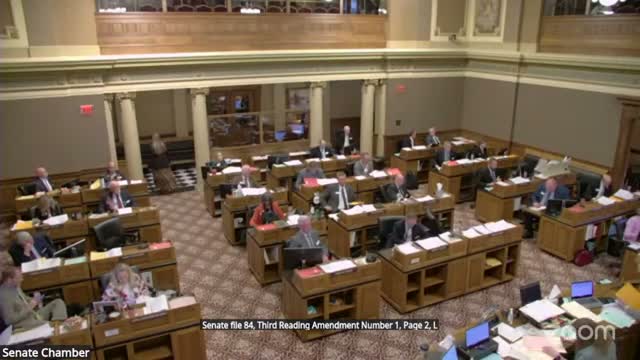
Summary
Lawmakers broadened a voluntary water‑conservation program for Wyoming’s portion of the Colorado River Basin, adding flexibility on measurement approaches and eligibility, and passed Senate File 84 after adopting amendment #1. Sponsors said the measure legalizes recognition of conserved water and creates a rulemaking framework for the state engineer.
Senate File 84, which establishes a voluntary water‑conservation program for Wyoming’s portion of the Colorado River Basin, was amended on the floor to clarify measurement methodologies, broaden eligible participants and add watershed‑improvement district involvement.
Senator Hicks, who brought the amendment, said the change recognizes conserved water in law and allows the state engineer to accept either inflow/outflow accounting per compact methodology or other accepted methodologies (including field‑level consumptive‑use estimates) when data permits. Hicks also said the amendment ensures other water users, including heavy industry and reclamation reservoirs, may participate where appropriate.
Concerns raised on the floor included monetization of conserved water, constitutional limits on special legislation, compact obligations and stakeholder input. Senator Steinmetz and others clarified that the Upper Colorado River Compact and the Upper Colorado River Commission (federal/compact framework) are relevant and that compact obligations remain binding.
The chamber adopted the amendment by division and passed SF84 on third reading (31 ayes). Supporters argued the program could enable broader participation and long‑term basin water supplies; opponents urged careful stakeholder vetting and attention to interstate compact obligations.