
Senate committee advances Fast Track Permits Act after broad support and debate over auto‑approval provision
Get AI-powered insights, summaries, and transcripts
Subscribe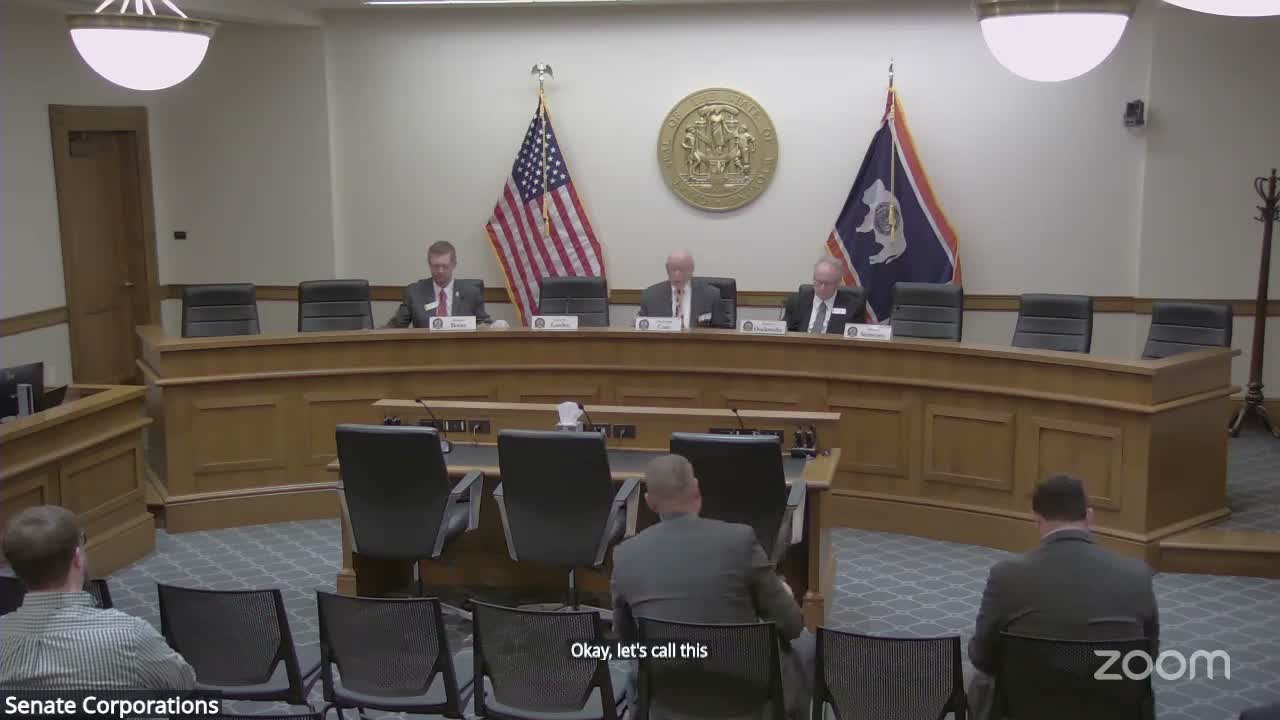
Summary
The Senate Corporations Committee voted to advance House Bill 2, the Fast Track Permits Act, which sets permit-review timeframes, requires clearer applicant communication and includes penalties when local reviews force redesigns; counties objected to a section allowing construction without a stamped permit.
Representative Lee Feiler introduced House Bill 2, the Fast Track Permits Act, telling the Senate Corporations Committee it is intended to speed permit review and help move more houses to market. "I bring you Fast Track Permits Act, fastest bill in the legislature," Feiler said in opening remarks, then described a shot‑clock approach and new accountability measures for both applicants and building departments.
The bill establishes standard timelines across the state’s 13 building departments, requires notification to applicants about deficiencies so they can complete an application, and pauses the statutory clock when an application is incomplete. Feiler also described a provision that would return a 10% cost to a builder when a municipal review error causes rework.
Supporters said the bill responds to a housing shortage and the high carrying cost of delays. "We estimate from talking to builders that it’s about $1,000 per $100,000," Renny McKay of the Wyoming Business Alliance told the committee, illustrating how months of delay can add substantial carrying costs. The Associated General Contractors of Wyoming emphasized the bill applies only to residential construction, "not commercial," and commended the sponsor for extensive interim stakeholder work.
Local governments and planners generally backed a coordinated, predictable process but split over paragraph "g," which would allow limited construction to proceed without a fully reviewed and stamped permit. "We would certainly prefer not to have section g," Nick Gopien of the Wyoming County Commissioners Association said, describing it as a new principle in the housing context and a point where counties and cities did not fully agree. WAM’s Ashley Harpreet said planners might be uncomfortable with "g," but WAM did not want to jeopardize the overall bill.
Proponents and some planning professionals argued paragraph "g" would be narrowly applied and cite analogous administrative approaches in other permitting contexts. Jeff Daugherty of Cicero Action and the Foundation for Government Accountability urged keeping "g," saying architects and applicants bear code‑compliance responsibility.
After testimony from municipal staff, builders and business groups, the committee took a roll‑call vote on HB2. The clerk announced the result as four ayes with one member excused, advancing the bill out of committee.
The committee record shows lingering disagreement about paragraph "g" and implementation details; committee members and stakeholders indicated willingness to continue working as the bill moves forward to ensure municipal processes and enforcement mechanisms align with the changes.
The bill will proceed to the next legislative stage following the committee vote.