Committee amends and advances long‑term homeowner tax exemption with $3 million cap and March 1 application date
Loading...
Summary
Senate File 39, which would repeal the sunset on the long‑term homeowner exemption, move the application deadline to March 1 and cap the exemption at the first $3,000,000 of value, passed committee after amendments and testimony from assessors, AARP and the Department of Revenue.
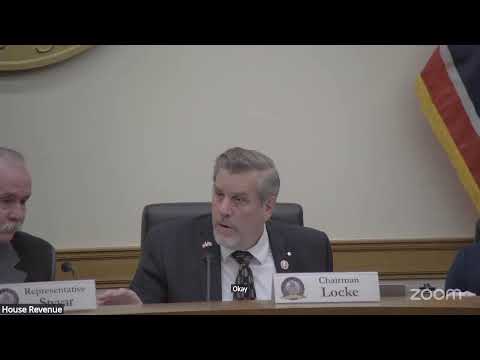
The House Revenue Committee voted to advance Senate File 39 as amended, a measure that would make several changes to Wyoming's long‑term homeowner property tax exemption.
Senator Crago, the bill sponsor, said the draft repeals the exemption's sunset date, moves the application deadline to March 1 (from the fourth Monday in May) and allows subsequent-year filings by telephone or other less‑formal means. He said the committee of the whole amendment caps the exemption at the first $3,000,000 of value.
Ken Gill, property tax division administrator with the Wyoming Department of Revenue, walked the committee through a drafting difference between the house and senate drafts. Gill explained the arithmetic is equivalent whether the statute references "assessed value" or "fair market value" because assessed value is roughly 9.5% of fair market value; he recommended replacing the assessed‑value phrasing with fair market value for clarity. Dixie Huxtable, an assessor testifying online, told the committee the March 1 date is clearer for taxpayer notices and supported adding language (from House Bill 45) that makes the exemption follow the owner when an owner sells and buys within the state so months of residency are consistently counted.
Tom Laycock of AARP Wyoming testified the $3,000,000 cap helps target relief to lower‑ and moderate‑income residents while preserving property tax revenue for elder services. Senator Crago also said the senate adopted a budget amendment to cover estimated costs and cited an estimate of $21,900,000 for the appropriation.
Committee members considered and adopted amendments (including changing the statutory phrase to "fair market value" and inserting owner‑follow language); the final roll call produced eight ayes and one conflict and the committee advanced the bill.