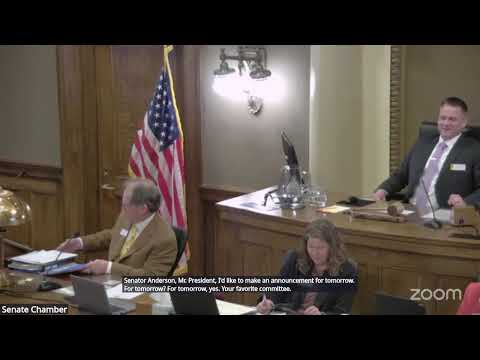
Senate committee advances $ hundreds of millions in K–12 facilities spending after heated debate on costs and maintenance
Loading...
Summary
House Bill 105, a large K–12 facilities appropriation bill that folds major maintenance and multiple program allocations into one package, passed the Committee of the Whole after senators debated major maintenance totals, charter lease funding, safety grants, and long-term fiscal implications.
House Bill 105, a major K–12 facilities appropriation measure, received a favorable recommendation from the Committee of the Whole after extended debate over scale, funding sources and long-term fiscal implications.
Sponsors walked senators through the bill's line-by-line appropriations: component-level maintenance ($31,661,000), charter school lease payments ($6,332,000 and line items on page 7), demolition projects ($2,620,000), a $10,000,000 safety allotment (restored in amendment), and an overall major-maintenance figure referenced in committee discussion as $2,237,865,123. Senators emphasized the bill merges large capital and major-maintenance spending that in prior years sometimes appeared in separate budget actions (discussion beginning at SEG 1520).
Opponents warned the combined spending pattern creates long-term structural obligations. Senator Scott said he was concerned the bill represents "a vote for a future tax increase," arguing that ongoing operating and maintenance costs could pressure future budgets. Supporters, including members of the Appropriations and Select Committees on School Facilities, said the bill had been thoroughly vetted through engineering and commission review and argued the appropriations address deferred maintenance and statutory lease obligations.
Amendments adopted by the committee clarified contingency language and increased the safety allotment back to $10 million, among other technical corrections. Senators asked staff and sponsors to provide additional fiscal details and breakdowns before second reading; the committee reported HB105 do pass as amended.
What happens next: HB105 was reported out of committee with a due-pass-as-amended recommendation; senators requested more precise cost breakdowns and confirmation of how project lists and contingency funds are allocated before final passage.