Committee backs kratom regulation after debate over testing precision and lab capacity
Loading...
Summary
The committee voted unanimously to advance Senate File 56, a kratom regulation bill, after testimony from the Department of Agriculture and Department of Health about lab testing limits, staffing needs, fiscal costs and enforcement; members debated whether a 0.2% threshold would effectively function as a ban and whether the lab could test to that precision.
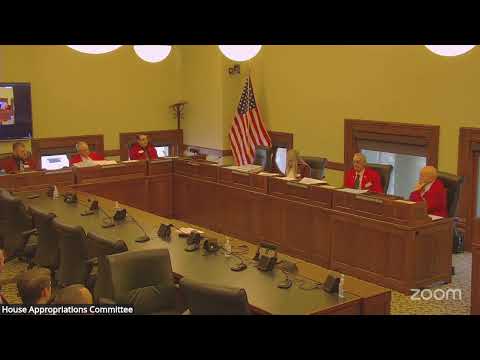
The House Appropriations Committee on Thursday reported Senate File 56 do pass after hearing departmental testimony about testing responsibilities, fiscal implications and enforcement.
Senator Landen introduced the bill and said it has received extensive testimony in both chambers; he noted public‑health concerns and said Wyoming has recorded nine deaths tied to the substance in the past two years. Landen framed the bill as a regulatory approach while acknowledging the Senate Judiciary Committee previously considered a ban.
Doug Miyamoto of the Wyoming Department of Agriculture told the committee the department's analytical services lab would perform concentration verification and compound identification for kratom products and that the lab already has a liquid chromatography mass spectrometer that could absorb a limited volume of testing (roughly 20 samples per month) without new equipment. Miyamoto said the fiscal note assumes a base chemical analyst position and recurring costs for solvents, disposables and glassware; he emphasized the process is labor‑intensive because samples require digestion and titration prior to concentration testing.
Committee members pressed whether the bill should ban kratom or regulate it with an age or concentration threshold. Members discussed a House Judiciary amendment that would lower a proposed 2% threshold to 0.2%; Department staff said the lab could not reliably test down to 0.2% with current equipment and would need additional methods and possibly equipment to reach that precision.
Rachel Nuss of the Department of Health said the department's fiscal role would focus on compliance checks to limit youth access and that the choice of threshold (2% vs 0.2%) would not materially change the Department of Health's fiscal note. Committee members also asked whether opioid settlement funds could be used to support implementation; Department of Agriculture agreed to follow up on funding and outreach to the state grants management office.
Vice Chair Pendergraft moved the bill do pass, seconded by Representative Angelos. The committee recorded seven ayes on roll call and reported Senate File 56 do pass.
The committee requested follow‑up information about testing capacity, potential equipment needs at the state lab, and possible funding sources to support lab staffing and supplies.