
Committee advances bill funding a full-time literacy coordinator at Wyoming Department of Education
Get AI-powered insights, summaries, and transcripts
Subscribe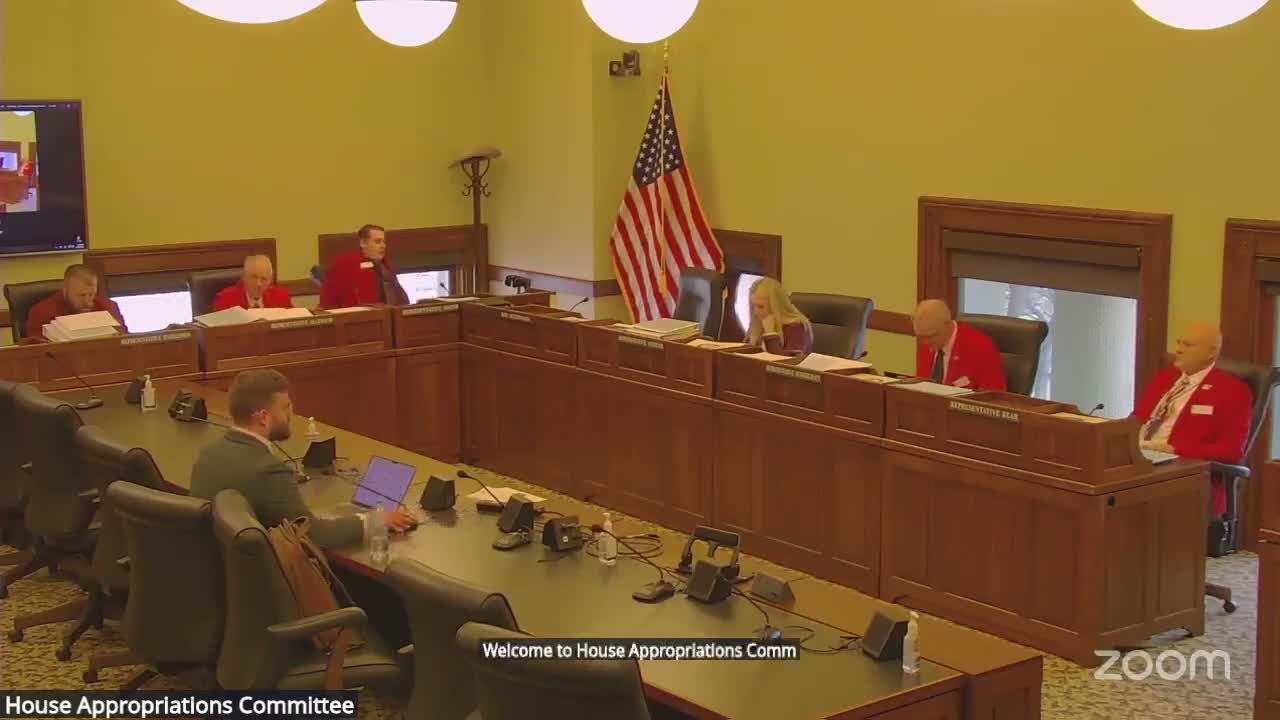
Summary
The House Appropriations Committee voted 4–3 to advance Senate File 14, which would fund one FTE and related contractual services at the Wyoming Department of Education to implement statewide K–3 literacy supports; witnesses and staff said the role would provide accountability, data tracking and professional development support to school districts.
The House Appropriations Committee on Thursday advanced Senate File 14, a bill that would appropriate funds to create a full‑time literacy position at the Wyoming Department of Education (WDE) and provide contractual resources for professional development.
Sponsor testimony described a $240,000 appropriation for the biennium to add one FTE, with additional contractual funds discussed on the fiscal note that committee members and staff characterized as producing a biennial total of roughly $540,000 (about $270,000 per year). Committee members asked staff for a one‑page breakdown of the position, TRP (equipment/computer) costs and contract spending before the bill is explained on the floor.
Retired teacher Gaye Wilson, who said she formerly helped manage the CLSD federal grant for WDE, told the committee school districts valued having a state contact for literacy support and that the proposed position would address statewide accountability and reporting needs. "We are the only state in the nation that does not have a literacy department," Wilson said, urging the committee to fund a full‑time staffer who could work with districts on curriculum reporting, assessment results and targeted professional development.
Dickie Shaner, chief of staff for the Department of Education, told the committee the requested FTE would fulfill duties tied to an existing early reading assessment and intervention statute referenced in testimony and cited the department's recent reorganization that created a literacy and early childhood team. Shaner said the department previously managed federal literacy grants and currently has a federal grant covering roughly nine to ten districts; the requested state position would oversee statutory requirements and support districts not covered by federal awards.
Committee members pressed for details on whether equipment and TRP were already available from prior federally funded positions, whether the FTE could be remote, and how districts were selected for federal grant funding. Shaner said the department would confirm equipment availability, that remote work would depend on the candidate's location, and that federal grant selection follows federal criteria and outside expert review.
After public testimony and staff answers, Representative Harrelson moved that the committee report Senate File 14 do pass; Representative Angelos seconded. On roll call, Representatives Aleman, Angelos, Harrelson and Sherwood (absentee) voted yes; Representatives Pendergraft, Smith and Chairman Bair voted no, producing a 4–3 committee vote in favor of do pass.
The committee asked staff to provide a concise cost breakdown on position salary, equipment (TRP) and contractual services to clarify the fiscal note before the bill proceeds to the floor.