Get Full Government Meeting Transcripts, Videos, & Alerts Forever!
Get email alerts on the Deposit Insurance Reform topic
No spam. Unsubscribe anytime.
Senate panel hears industry support for targeted FDIC coverage of payroll and operating accounts; witnesses urge indexing and data-driven thresholds
Summary
Bank and credit-union witnesses told the Senate Banking Committee that targeted FDIC coverage for non-interest-bearing payroll/operating accounts could protect small businesses and community banks; mid-size banks and credit unions suggested a $20,000,000 target for operating accounts and recommended indexing to inflation, while a former FDIC official urged caution and more data.
WASHINGTON — The Senate Committee on Banking, Housing, and Urban Affairs spent its hearing Tuesday exploring how to modernize the nation’s deposit insurance system after the March 2023 failures of Silicon Valley Bank and Signature Bank.
Witnesses representing community, mid‑size and regional banks and credit unions urged Congress to consider targeted coverage for non‑interest bearing operating and payroll accounts and to index any new limits to inflation. Bob Harrison, chairman and CEO of a midsize bank coalition, said his group supports a targeted, industry‑funded expansion and told the committee, "Expand FDIC coverage for business operating accounts as payroll and working capital. It's not a blanket guarantee for all deposits. It's a specific fix to the problem that triggered the 2023 runs." (testimony summarized from committee record).
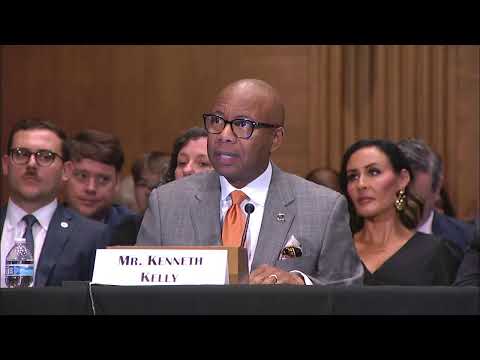
Kenneth Kelly, chairman and CEO of First Independence Bank and chair‑elect of the American Bankers Association, emphasized that any new dollar limit should be "empirically based" and indexed. Kelly described a 10‑point ABA recommendation package covering emergency authority, coverage design, resolution rules and transparency; he told senators the ABA had not settled on a single dollar figure but urged additional data collection to weigh tradeoffs.
Peter Rice, president and CEO of Hanscom Federal Credit Union, described the human cost of the 2023 disruptions and framed payroll‑account failures as an economic and national‑security risk: he noted payroll freezes that left small businesses unable to run payroll and said targeted protections for payroll accounts would protect jobs and supply chains.
Several witnesses and senators discussed coverage-size options that witnesses said would materially change the insured share of deposits: testimony cited that at a $250,000 limit roughly 57.7% of deposits are currently insured, that coverage rises to about 90% at $5,000,000 and up to roughly 98% at $20,000,000 for many operating accounts. Witnesses and senators also recalled that temporary federal actions in 2023 extended protection to uninsured deposits under the FDIC’s systemic‑risk exception.
A former FDIC general counsel on the panel, Nicholas Paziodli, urged caution. He described three FDIC options explored in 2023 — limited (status quo), unlimited (systemic‑risk style) and targeted coverage — and warned that indexing or high fixed thresholds could create deposit concentration or aggregation risks at smaller institutions if not designed carefully. Paziodli noted estimated losses from the 2023 failures were about $35.2 billion as of September 2023 and said distribution of those costs remains a policy issue for Congress and regulators.
Senators asked how the program would be paid for and who would bear assessment costs. Witnesses largely backed a phased‑in, bank‑funded approach with a 10‑year transition to avoid immediate rate shocks to community banks; Harrison said industry funding would be the mechanism and suggested phasing to mitigate assessment pressure.
Committee members and witnesses discussed complementary tools — better use of the Federal Reserve’s discount window, reciprocal deposits, and resolution authority reforms — and stressed that indexing any new statutory thresholds would guard against rapid obsolescence. The committee set a tight follow‑up schedule: senators may submit questions for the record by Wednesday, Sept. 17, and witnesses have 45 days to respond.
What’s next: Senators on the panel signaled support for further work and for legislative text to be refined. Several members indicated they plan to introduce or refile targeted coverage legislation; the committee did not take immediate votes on a bill during the hearing.
(Reporting is based on witness testimony and senators’ remarks recorded in the committee transcript.)