Get Full Government Meeting Transcripts, Videos, & Alerts Forever!
Get email alerts on the Veterans Graves Upkeep topic
No spam. Unsubscribe anytime.
Working group urges municipal complaint mechanism and grants to address neglected veterans graves
Summary
A Veterans Graves Upkeep working group recommended municipalities appoint three-veteran committees, create a Department of Consumer Protection-administered complaint and grant program for cemetery upkeep, and flagged unclear language for dormant cemeteries that needs clarification before the bill advances.
Municipal and working-group witnesses urged statutory changes and clearer enforcement to address neglected veterans’ graves across Connecticut.
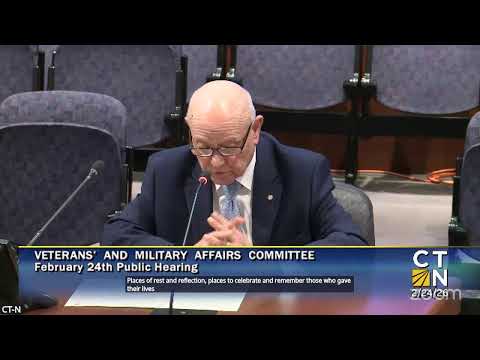
First Selectman Mike Bridal (North Haven), co-chair of a working group, said many veterans’ graves are in private or nonprofit cemeteries and that municipalities receive complaints about neglected markers and upkeep. Bridal proposed municipal grant applications to fund repairs and appointing three veterans in each municipality to serve as liaisons for complaints and coordination with state agencies.
Ronald Shea, a member of the Veterans Graves Upkeep Working Group, described the working group’s recommendations to require municipalities to appoint three veterans to advise on upkeep, to allow the Department of Consumer Protection (DCP) to receive and manage complaints, and to establish a grant program to pay for repairs "within available appropriations." Shea cautioned that certain statutory phrases (for example, "suitably cared for") are not clearly defined and that ambiguous language should be clarified before the legislation moves forward.
Committee members praised the collaborative work but asked for written testimony and suggested the committee will consider substitute language to address ambiguities, funding mechanisms and responsibilities for ancient or dormant cemeteries.
No formal vote was recorded at the close of the hearing.