
Nebraska committee hears bid to freeze and roll back building, electrical and energy codes to address housing costs
Get AI-powered insights, summaries, and transcripts
Subscribe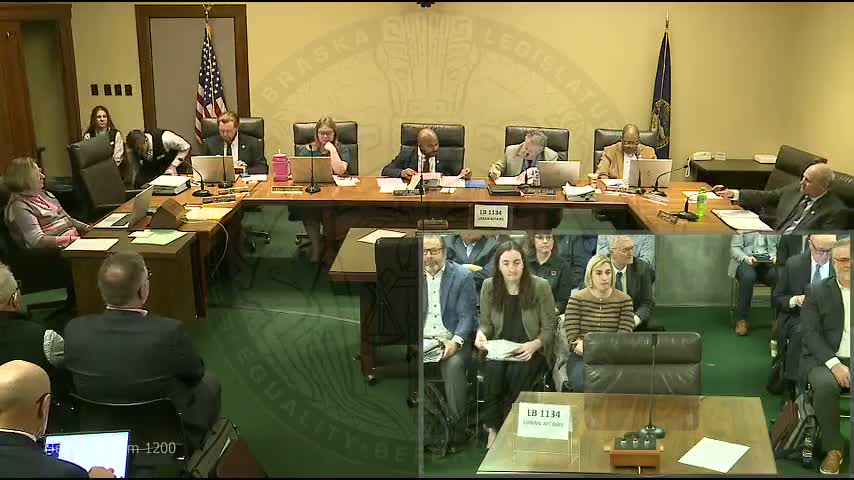
Summary
Sen. Kathleen Kauth introduced LB 11-34 to limit state and local updates to residential, electrical and energy codes and require independent proof that code changes are necessary for safety; supporters said targeted rollbacks could lower initial construction costs, while opponents warned of higher long‑term energy bills, reduced safety and lost local control.
Senator Kathleen Kauth (District 31) told the Urban Affairs Committee that LB 11-34 is intended to address Nebraska's housing affordability crisis by restricting future state and local updates to building, electrical and energy codes and by requiring independent third‑party evidence that proposed changes are necessary for safety. "Nebraska is currently facing a significant housing crisis," Kauth said, adding that "one of the primary drivers of this increasing cost is a regulatory cartel of ever updating and increasingly stringent building codes that add thousands of dollars to the price of every new home."
Supporters from the home‑building and affordable‑housing sectors urged the panel to focus on the specific code items they view as cost drivers rather than keeping blanket, automatic adoptions. Justin Brady, a registered lobbyist for the Nebraska Realtors Association, Nebraska State Home Builders Association and Habitat Omaha, said the industry wants to "take a step back and say, are there pieces?" Brady added that some code changes amount to a small number of high‑cost items amid hundreds of pages of updates. Adam Flanagan of the Welcome Home Coalition told senators that regulation can account for a substantial share of new‑home costs and that rolling back select requirements could make entry‑level homes financially feasible again.
Opponents including trade and safety organizations pressed the committee to consider long‑term and lifecycle costs. Representatives from the National Electrical Manufacturers Association, ASHRAE and the Nebraska Electrical Division argued that modern codes incorporate improved safety, energy savings and newer technologies — benefits they said would be lost under a broad reversion to 2008–2009 standards. "Model building codes provide the blueprint, and are meant to be a minimum," Chris Bressee of NEMA said, warning that a rollback "would very negatively impact long term energy costs for homeowners." Several engineers and union representatives described public‑safety protections (arc‑fault, ground‑fault devices, wiring methods) and workforce training tied to current codes.
Committee members repeatedly framed the bill as the start of a broader review rather than a final mandate. Senators asked for comparative data, asked whether a 5‑year or 7‑year homeowner occupancy horizon would justify various updates, and urged stakeholder meetings over the interim to parse which specific code provisions might be reasonable to revisit.
The committee recorded online testimony noting two proponents, 44 opponents and one neutral comment. The hearing concluded with the introducer waiving a closing statement and committee staff noting requests for follow‑up studies and stakeholder engagement.
The committee did not vote on LB 11‑34 and signaled further study and conversations would follow over the summer.