Get Full Government Meeting Transcripts, Videos, & Alerts Forever!
Get email alerts on the Accessory Dwelling Units topic
No spam. Unsubscribe anytime.
Berlin planners weigh how to implement state-mandated ADU rules before Oct. 1, 2026 deadline
Summary
Town planners and council members discussed the state task force ADU report and debated whether ADUs should be allowed by-right or require conditional use, while focusing on parking, water/sewer (EDU) charges, size limits, owner-occupancy and next steps toward a local ordinance.
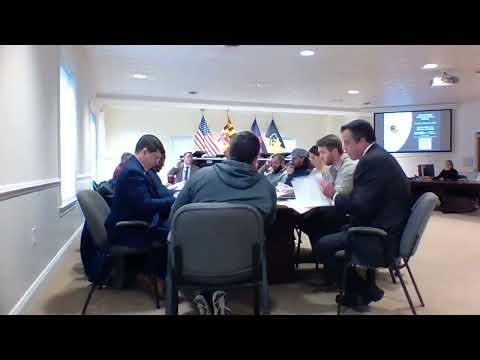
A Berlin planning commission meeting on March 9, 2026 focused on how the town should implement state-directed accessory dwelling unit (ADU) legislation that must be adopted into local code by Oct. 1, 2026. Participants reviewed a state task force final report issued May 31, 2024 and debated by-right approval versus conditional-use pathways, parking and water/sewer (EDU) impacts, size and design limits, and enforcement approaches.
The meeting opened with a staff overview of the state task force recommendations, which include making one ADU a by-right use in areas where single-family housing is permitted while steering clear of prescribing local parking and lot rules, instead offering guidance and resources for jurisdictions. "The auxiliary dwelling unit policy task force final report ... was issued by the state on 05/31/2024," a presenter said, summarizing the packet supplied to the commission.
Why it matters: the state deadline requires Berlin to adopt an ADU ordinance that conforms with statutory direction. Commissioners and council representatives repeatedly emphasized that local conditions — notably narrow lots, stormwater and parking constraints, and the town’s existing short-term rental rules — will shape which state recommendations Berlin can reasonably adopt and where tailored limits may be appropriate.
Size, placement and accessory character: commissioners discussed multiple sizing approaches. One recurring baseline was the county model included in the packet: one ADU per lot with minimums and maximums commonly ranging from about 500 to 900 square feet, or a cap set as a percentage (for example, 35%) of the principal residence, whichever is smaller. Several speakers said Berlin’s smaller, quarter-acre lots may warrant tighter maximums than county standards. The group also discussed keeping ADUs accessory in character by requiring placement within roughly 100 feet of the primary dwelling and by applying the same setbacks as the primary structure.
Parking and on-site accommodation: commissioners noted Berlin’s residential parking study is outdated and that, under common practice, a jurisdiction would need evidence of parking impacts before forcing additional on-site spaces. Options discussed included: (1) requiring on-site parking as the default; (2) allowing a narrowly defined in-lieu parking fee for cases that cannot meet on-site requirements; or (3) commissioning a limited, targeted parking assessment rather than a large study. Participants cautioned that many Berlin streets may lack capacity for additional curbside parking and that any town program should avoid requiring wholesale paving of small lots.
Water/sewer (EDU) and impact fees: speakers debated how the town should treat EDUs for ADUs. One participant cited a roughly $17,000 EDU figure; others proposed fractional or phased charges tied to measured additional flow rather than immediately levying a full EDU. An option discussed was monitoring usage through an annual ADU license renewal and assessing additional EDU charges only if measured consumption exceeds thresholds, thus reducing the upfront cost barrier for homeowners converting existing space.
Short-term rentals and owner-occupancy: packet language and state guidance prompted discussion about whether ADUs should be allowed for short-term rentals. The group indicated it will pursue an owner-occupancy requirement similar to the town’s short-term rental policy (tied to homestead-style enforcement), while exploring whether the town can lawfully restrict short-term rental use of ADUs under the new state law.
Design, conversion and enforcement concerns: commissioners raised design questions (limiting height to one-and-a-half stories, preventing shipping-container or otherwise incompatible ADU types, addressing 9-1-1 addressing and access) and considered an amnesty or phased compliance approach for existing, unpermitted ADUs. Several participants warned that permissive rules without careful design and setback limits could enable investors to convert lots in ways that change neighborhood character and upwardly pressure housing prices.
Next steps and follow-up: the commission identified follow-up work: get legal clarification on what the state law permits or prohibits (especially concerning by-right versus conditional-use status and historic-district exceptions); refine options on parking (thresholds, in-lieu fees, and streets where on-site parking is infeasible); and craft an EDU/impact-fee proposal that balances utility-system capacity with affordability. Staff were asked to collect sample ordinance language from Worcester County and other jurisdictions in the packet for the next meeting.
The commission agreed to reconvene soon to translate these initial preferences into draft ordinance language, track required deadlines, and coordinate with town counsel before formal public hearings.