
Council denies petition on informal conferences and adopts rule package including ISC clarification
Get AI-powered insights, summaries, and transcripts
Sign Up Free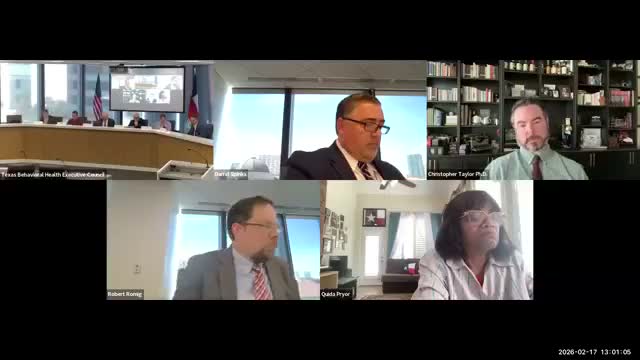
Summary
The council denied a petition seeking changes to informal conference (ISC) procedures and adopted a package of proposed rule changes, including clarifying when staff may handle certain ISCs without a professional board member present while preserving opportunities to consult professional members or secure expert reviewers for contested professional matters.
The Texas Behavioral Health Executive Council on Feb. 17 voted to deny a petition for rulemaking concerning informal conferences (proposed change to rule 8.84.11) and adopted a package of related rule changes for BHEC and member boards.
Staff recommended denial of the petition and explained the agency currently allows staff to handle straightforward investigations and settlement conferences where no professional judgment is required; the proposed language would permit staff to proceed without a professional member present in clear‑cut cases (for example, record‑keeping violations) while preserving the option to involve a board member or an expert reviewer when professional standards are at issue.
"The staff are recommending denial of the petition," a staff member told the council and explained safeguards that would be added to notices so respondents and their attorneys are informed when an ISC will proceed without a board member. Council members asked how the approach would stand up at SOA and in appeals; staff stressed that to prevail at a contested SOA hearing the agency must provide expert evidence on professional standards and would secure expert reviewers if the matter required one.
Council members voiced support for streamlining clear administrative cases but emphasized oversight: several members noted that member boards and council members retain the right to request files, attend ISCs and participate in oversight committees that review staff closures. Staff said the change largely codifies current practice and would be implemented with multiple safeguards and reporting back to member boards.
The council then adopted the rule package (including a non‑substantive graphic correction to fee language in 8.85.1 and proposals for member boards’ rules) by voice vote. Staff said the change is intended to reduce delays in processing the agency’s large enforcement caseload (roughly 900 pending complaints) while maintaining due‑process protections.
What’s next: The rules were adopted as proposed with the stated corrections; staff will add notice language, track ISC outcomes and return to the council if unintended consequences appear.