
Tullahoma aldermen debate using airport funds to cover fuel‑spill costs and re‑examine airport authority agreement
Get AI-powered insights, summaries, and transcripts
Subscribe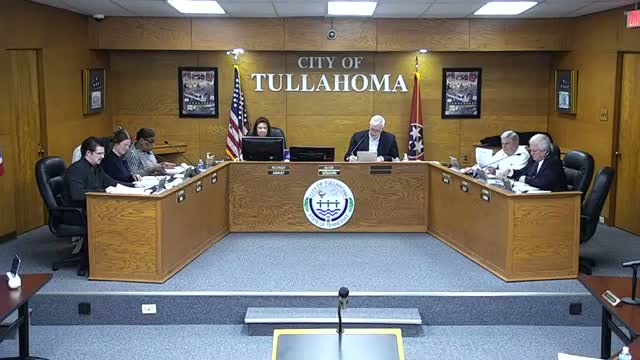
Summary
A long board discussion centered on whether airport revenue can pay for remediation of a recent fuel spill, guided by an FAA‑specialist attorney opinion that such costs "may" qualify if directly related to airport operations; aldermen and city attorneys warned FAA scrutiny and potential grant repayment. The board also reviewed the 2011 agreement with the Tullahoma Airport Authority and raised concerns about the authority’s hiring process for an airport manager and internal controls.
Mayor and the Board of Mayor and Aldermen spent the latter portion of their Feb. 23 meeting on a detailed information item about a recent fuel spill at the Tullahoma airport, whether airport revenue could cover remediation expenses, and the city’s existing agreement with the Tullahoma Airport Authority (TAA).
City alderman Blake summarized a legal analysis provided by aviation attorney David Hernandez, who concluded that airport revenue may be used for capital or operating costs "directly and substantially related" to air transportation and that environmental cleanup and fuel‑system remediation are typically recognized airport operating costs. Blake said Hernandez also flagged risk areas the FAA would scrutinize and recommended a careful expense review before seeking reimbursement from federal sources.
Mayor and several aldermen stressed that the FAA reviews reimbursements closely. City attorney Miss Hoskins warned that miscategorizing expenses could jeopardize grant funding: "If the FAA found that the revenue from the airport was used improperly, ... they can find them and part of their punishment is they have to repay all of the grants they received." She said that the city should obtain the attorney’s review of the city’s actual invoices and have him present findings to the board or at a study session.
Alderman 7 and others asked staff to separate costs that are clearly remedial from work that appears to be improvements (for example, landscaping), because the FAA typically requires restoration to prior condition rather than upgrades. City staff said they would request a line‑item breakdown from OES (the contractor) and provide materials to counsel for review.
The discussion then expanded into a broader review of the existing 2011 agreement between the city and the TAA that makes airport employees city employees for benefits but gives the authority control over selection of the airport manager. City administrator Jason Quick presented a multi‑page packet outlining concerns raised during the TAA hiring process for an airport manager: some candidates’ applications did not follow city HR procedures, one candidate alleged interview panel members had connections to airport operations that created an awkward dynamic, and there were questions about whether the authority followed the city’s recruitment standards for other airport hires.
Quick told the board that, under the contract, the TAA is to recruit the airport manager and then provide a written recommendation to the city administrator, who can approve or deny that recommendation; if the administrator denies it, the matter returns to the authority. Several aldermen said that, regardless of the contractual language, the city needs clarity on roles and protections to limit legal exposure and better define when employees are "city" employees versus "airport" employees.
Aldermen noted separate operational control problems at the airport, including an erroneous $53,000 charge arising from a card‑entry error and a recent fuel spill. Several board members urged repairing the relationship with the Airport Authority and proposed convening a steering committee or study session with all stakeholders to review the 2011 agreement, HR processes, internal controls and the airport’s financial reporting.
The mayor said he intends to form a steering committee to meet with stakeholders and craft recommendations. Multiple board members asked that the FAA‑specialist attorney be asked to review the city’s invoices and to brief the board in a study session on the specific line items that might or might not be eligible for airport fund reimbursement.
What’s next: staff will obtain itemized contractor invoices and consider retaining or engaging the FAA attorney to review eligible charges; the mayor said he will form a stakeholder steering committee to examine the 2011 airport agreement and propose any necessary revisions.