Lifetime Citizen Portal Access — AI Briefings, Alerts & Unlimited Follows
FERC chair warns U.S. grid is tight after heat wave, cites PJM peak of 161 GW and calls for more dispatchable capacity
Loading...
Summary
FERC's chairman said recent heat-driven demand pushed many grid operators close to emergency conditions, citing PJM's 161-gigawatt summer peak and roughly 10 GW of reserves; he urged more dispatchable resources, supported NERC's inverter ride-through proposals and said state rules govern data-center interconnection.
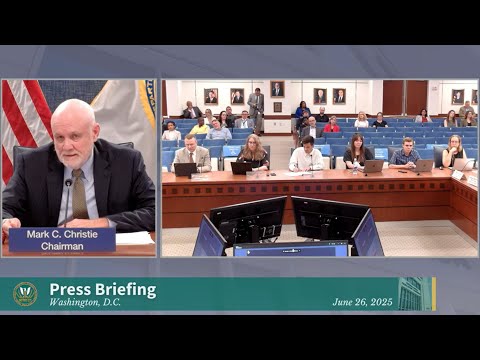
The Federal Energy Regulatory Commission's chairman warned that this week's heat-driven demand pushed several grid operators close to emergency conditions and underscored the need for more dispatchable generating capacity.
"Resource adequacy is the central issue facing this country going forward," the chairman said in opening remarks, citing PJM Interconnection data showing a winter peak of 145 gigawatts on Jan. 20 and a summer peak of 161 gigawatts Monday at 6 p.m. He said dispatchable resources provided about 88% of the supply at the January peak and about 83% at the recent summer peak, with roughly 10 gigawatts of reserves available at that moment.
Those numbers, the chairman said, demonstrate that the grid's margin for error is thin: "If we'd had rolling outages, load shedding, in these temperatures, it would have been life threatening," he said, praising system operators and demand response programs that lowered peak load.
Why it matters: The chairman framed the debate around two linked questions — how to ensure enough capacity at peak and who makes those decisions. He said FERC does not pick a state's generation mix and does not license or permit individual generating units; those choices remain primarily at the state level. On that point he stated plainly: "FERC doesn't pick a generation mix. FERC doesn't license or permit a single generating unit." That distinction matters for policymakers weighing state measures — such as a Texas law giving local operators new authority over certain customers — against federal oversight.
On data centers and state authority: Asked whether a Texas law allowing local grid operators to disconnect data centers during firm load-shed events could be applied nationally, the chairman noted Texas operates its own grid outside FERC jurisdiction and described retail customer interconnection as governed by state law. He declined to take a position on the Texas law's merits but observed that large cloud providers likely opposed it.
Reserve margins and federal roles: When asked about a forthcoming Department of Energy methodology for national reserve margins, the chairman said he had not seen the DOE text but reiterated a recurring question from FERC's technical conference: should there be a mandatory reserve requirement for load-serving entities in RTOs? "I personally think we're gonna have to move towards something like that," he said, citing how tight operators were during the heat event.
NERC standards and inverter-based resources: The chairman expressed strong support for NERC's engineering-driven proposals on inverter-based resource (IVR) ride-through capabilities, saying they offered the technical solutions needed to address reliability risks associated with high penetrations of wind and solar. "NERC is supposed to give us dispassionate, objective engineering-based recommendations," he said, adding he saw no reason to doubt those findings.
On batteries and capacity: The chairman cautioned that current battery deployments typically provide two to four hours of storage and that commercial-scale batteries are usually on the order of a few hundred megawatts, so they cannot yet substitute for long-duration dispatchable capacity. "Battery technology needs to continue to develop," he said, while stressing that capacity — the ability to deliver when called upon — still depends on dispatchable resources.
What happens next: The chairman pointed to continued technical work at FERC and NERC and said July is traditionally a busy month for FERC business, with additional rulemaking and conference work to come. He also noted that any federal moves to standardize reserve requirements would intersect with state-controlled decisions on generation mix.
Speakers quoted are limited to those recorded in the transcript: the chairman and named reporters who asked questions. The session included follow-ups on pending pipeline applications (which the chairman said he could not discuss) and on the broader policy trade-offs between state authority and federal reliability standards.