Lifetime Citizen Portal Access — AI Briefings, Alerts & Unlimited Follows
After “7 County” ruling, FERC to adopt its own NEPA procedures; chairman expects CPCNs will continue to face litigation
Loading...
Summary
The chairman said the Supreme Court "7 County" decision narrows agency NEPA obligations to jurisdictional activities, overturning prior precedent such as Sable Trail; FERC will develop its own NEPA procedures and said CPCN decisions (e.g., CP2 LNG) are routinely litigated.
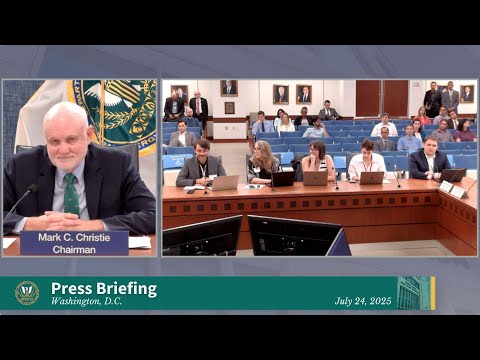
The Chairman told reporters that the Supreme Court "7 County" decision clarifies that agencies are required to analyze environmental impacts only for activities jurisdictional to the agency, rather than routinely evaluating broad upstream or downstream effects. He said the decision effectively overruled the Sable Trail approach and that FERC will develop its own NEPA procedures to reflect the new legal framework.
"7 County was a very important decision by the Supreme Court," the chairman said, adding agencies may still analyze downstream or upstream impacts when the agency, in its judgment, finds a sufficiently close nexus. He described work under way at FERC to write agency-specific NEPA procedures now that CEQ processes are no longer being followed as before.
When asked about CP2 LNG and related air permits, the chairman declined to comment on active litigation but said it is typical for every Certificate of Public Convenience and Necessity (CPCN) FERC issues to be litigated and that the agency tries to ensure CPCNs comply with NEPA and other statutes.
He framed the change in NEPA practice as resolving a longstanding source of litigation and said it gives the agency clearer boundaries for what effects must be analyzed in environmental reviews.