Lifetime Citizen Portal Access — AI Briefings, Alerts & Unlimited Follows
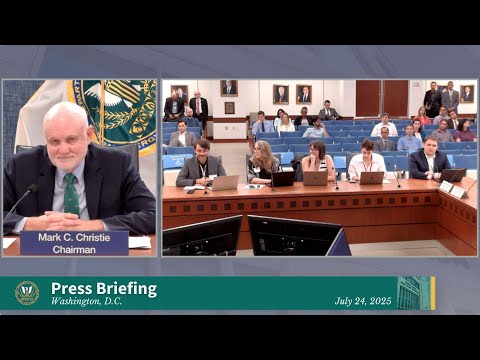
FERC chairman: PJM capacity auction fell short and reliability 'is here now'
Loading...
Summary
FERC's chairman warned that the latest PJM capacity auction failed to meet reliability requirements and urged new generation financing, saying data-center load is driving record demand. He later corrected the shortage estimate from ~300 MW to about 200 MW.
FERC Chairman said the latest PJM capacity-auction results show an immediate reliability problem and called for new generation to avoid outages. "The reliability threat I've been talking about for 4 years ... is actually here now," he said, adding that the auction fell short of its reliability requirement and was covered with FRR resources.
The chairman said capacity prices in PJM hit all-time highs while certain transmission costs remain the largest driver of monthly bills. He listed three primary ways to finance new generation—rate basing, relying on the capacity market, or using purchase-power agreements (PPAs)—and emphasized that building new dispatchable or upgraded generation is essential to meet rising load forecasts.
He repeatedly flagged data centers as a major driver of rising demand: "Almost all the load forecast that pushes the demand curve up is data center load," the chairman said, adding that communities must build generation to serve those centers and other consumers.
During questions, he acknowledged geographic differences in exposure to capacity-market prices, noting residents in deregulated states such as Maryland, New Jersey and Pennsylvania feel the impact more directly than those in vertically integrated states like Virginia.
In closing, the chairman corrected an earlier figure: the auction shortfall he initially called about 300 megawatts was, he said, closer to about 200 megawatts but still had to be covered with FRR assets—the first time that had happened, he said.
The chairman framed the shortage as evidence that state policy choices about financing generation will be consequential going forward and urged states and market participants to prioritize long-term resource adequacy.