Get Full Government Meeting Transcripts, Videos, & Alerts Forever!
Get email alerts on the Operating Reserves topic
No spam. Unsubscribe anytime.
Study finds 60‑minute ramping products often raise costs in rolling‑horizon simulations
Summary
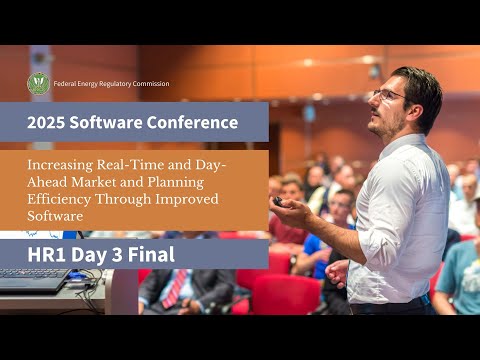
Penn State researcher Mort Webster presented simulations showing that adding a 60‑minute flexible‑ramping product tended to increase operating costs in most sampled days, largely because rolling‑horizon unit commitment can overcommit fast starts and delay efficient combined‑cycle starts.
Mort Webster of Penn State presented controlled experiments and PJM simulations testing whether adding long‑duration ramping products (e.g., 60‑minute) to short products (10–15 minute) improves reliability and lowers costs.
Webster said the team constructed toy models and then ran a 20‑day sample on a future PJM case. "On balance over the 20 days, there were 3 where you got a tiny bit of savings and 17 of the 20" where adding the long product increased costs, he reported. The principal mechanism was that in a rolling‑horizon real‑time unit commitment, earlier rounds find it cheaper to rely on fast starts; by the time the need for slower, more efficient combined‑cycle units becomes clear, the market has delayed them and committed more combustion turbines, raising overall costs.
Webster explained design choices that affect outcomes: whether the longer product is enforced in real‑time unit commitment (RTUC) or only in the dispatch engine, how quantities and overlap are specified, and assumptions about forecast error and available commitment recourse. He recommended one mitigation: hold the 60‑minute ramping requirement in the dispatch engine rather than in RTUC to reduce premature overcommitment while preserving incentive and pricing signals.
Audience questions addressed storage, possible double counting between short and long products, and modeling detail. Webster said his experiments excluded storage for clarity, and that controlled experiments were intended to isolate dispatch/commitment dynamics rather than provide final policy conclusions.
Webster framed the findings as work in progress and encouraged feedback from system operators and ISOs implementing or observing 30–60 minute ramp products.