
Advocates warn rising insurance and operating costs are stressing affordable housing and seek preservation funding
Get AI-powered insights, summaries, and transcripts
Subscribe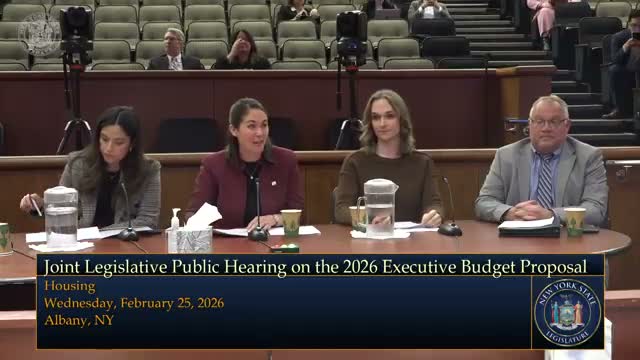
Summary
Providers and finance experts told the hearing that operating costs — especially insurance — have surged and threatened preservation of regulated housing; they urged a $150M affordable housing relief fund and support for J‑51 reauthorization and other preservation tools.
Nonprofit lenders and preservation advocates used the budget hearing to highlight a growing preservation crisis: many regulated affordable properties are under financial strain as insurance premiums, utilities and labor costs rise faster than allowable rent growth.
Speakers from the Community Preservation Corporation, Enterprise Community Partners and the New York State Association for Affordable Housing urged the Legislature to fund an affordable housing relief fund (advocates proposed roughly $150 million) to provide emergency grants and low‑interest loans so owners can make repairs, avoid deferred maintenance and prevent forced sales or foreclosures. "In a four‑year period, per unit operating expenses increased by 22 percent," said a CPC witness describing trends in their portfolio.
Panelists also supported the governor’s proposals to increase transparency about insurance rate increases, incentivize risk mitigation measures and allow participation in captive insurance arrangements, and urged exploring a state reinsurance backstop to stabilize premiums. Preservation proponents also said the J‑51 reauthorization (proposed to cover 100% of eligible costs and be extended for 10 years) is crucial to allow owners to make capital improvements without passing costs to tenants.
Housing authority representatives and public‑housing directors noted federal funding uncertainty and rising premiums that in some cases have increased by up to 40 percent for authorities, diverting money from maintenance. They urged restoring and expanding capital funding for housing authorities and preserving manufacturing of small‑scale preservation programs that serve rural and suburban areas.
Lawmakers asked for more granular budget and program detail; advocates said additional targeted operating and capital support for preservation is more cost‑effective than trying to replicate lost units with new construction.