
Senate subcommittee advances bill to regulate hemp-derived THC beverages, debates age limits for gummies
Get AI-powered insights, summaries, and transcripts
Subscribe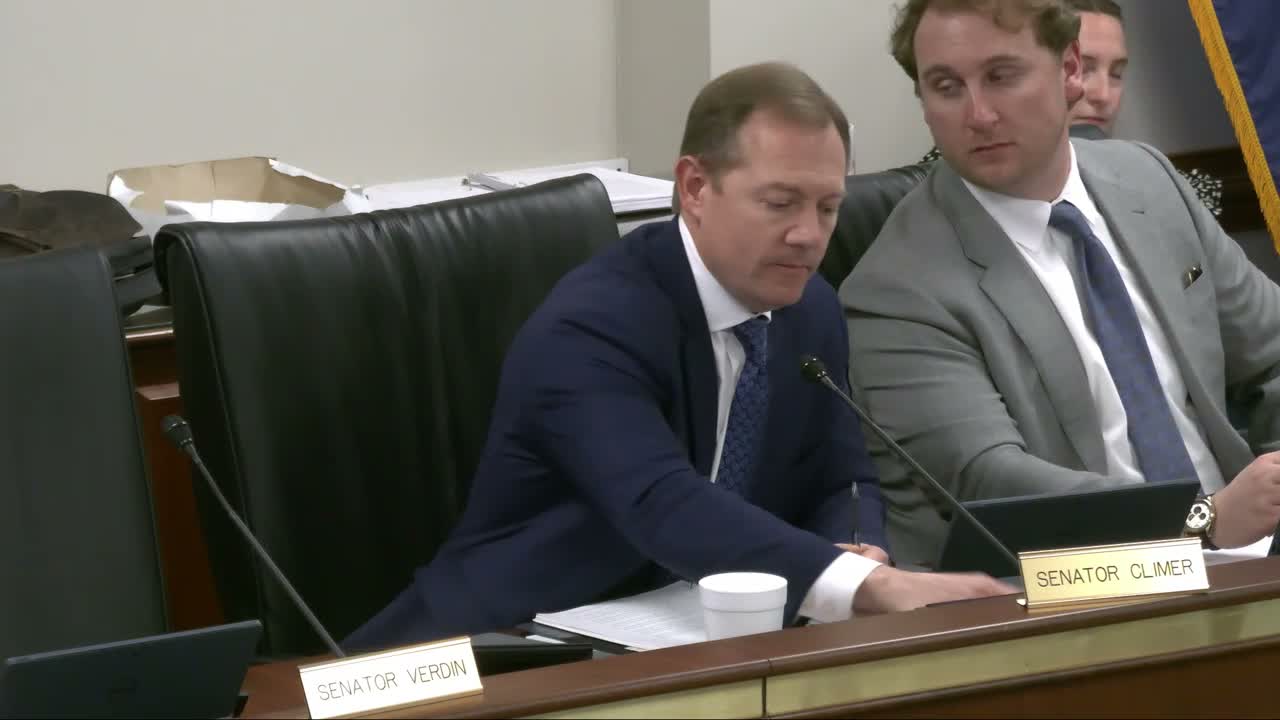
Summary
A South Carolina Senate subcommittee voted to report favorably a bill to regulate hemp-derived THC beverages and related products, adopting a committee amendment after hours of questioning about age limits, packaging, licensing and whether gummies should be treated differently from beverages.
A Senate subcommittee on Thursday reported favorably a bill that would regulate consumable hemp products containing THC, adopt an alcohol-style three-tier distribution system, impose labeling and testing requirements and ban synthetic cannabinoids such as delta‑8 and delta‑10.
The bill’s sponsor and subcommittee chair told members the draft bans possession and consumption by those under 21 for the beverages and would place smaller cans (5–10 milligrams, 12‑ounce) in general retail and larger bottles in liquor stores, while requiring certificates of analysis with scannable lab data on every container. ‘‘There is nothing in this bill that regulates CBD. I want to make that clear,’’ the subcommittee chair said during the session.
The measure also directs the Department of Revenue to administer licensing, uses SLED as the enforcement arm and includes a grandfathering provision allowing some inventory purchased before the bill’s effective date to be sold with appropriate lab documentation.
Why it matters: The bill seeks to bring an unregulated market under state oversight by borrowing many of the alcohol regulatory tools that already govern beer, wine and liquor — a strategy intended both to set age limits and to create a familiar enforcement and taxation framework. Proponents said a statewide approach would prevent patchwork municipal rules and better protect public safety; critics raised concerns the bill mixes recreational access with medical needs and could create constitutional challenges depending on how the law defines ‘‘beverages’’ vs. solid or gelatinous products.
Committee debate focused on three central disputes. First, how to treat gummies: several members warned that gummies are not beverages and that labeling them as such could prompt legal challenges under the state constitution. The chair said the legislature can ban a product entirely or regulate it for adults, adding that ‘‘you may be able to define a THC beverage as an alcoholic beverage’’ to support a 21‑year age limit. Other members said that because gummies are not liquid the constitution might require an 18‑year standard for non‑alcoholic items, creating a legal risk if the committee set gummies at 21.
Second, packaging and child‑appeal drew sustained attention. Senators described packaging shown at subcommittee hearings that resembled popular candy brands and said tighter restrictions would be needed to prevent marketing to children. A member of the subcommittee noted the group could reuse detailed packaging rules previously drafted for the medical‑marijuana debate.
Third, implementation and regulatory work were discussed at length. The chair said the bulk of licensing and distribution could be folded into existing chapters of state law and existing Department of Revenue rules, though a few novel provisions will require new regulations. Members also discussed Sunday‑sales referenda and whether adding hemp beverages to local vote language would require separate public referenda in some counties.
Several senators urged sensitivity to veterans and others who use hemp‑derived products for symptom relief, and they urged the legislature to pursue a medical pathway in parallel rather than treating all uses the same. The chair said the bill was drafted as a consumer/regulatory framework, not a medical‑marijuana measure, and that medical uses should be addressed in a separate statute.
Outcome: The subcommittee adopted the committee amendment as printed and moved the bill forward to the full Senate with a favorable report. The committee voted by raised hands; no roll-call tally was recorded in the transcript. The chair closed the hearing and the committee adjourned.
What’s next: Because the subcommittee reported the matter favorably, the bill is eligible for prompt floor consideration by the Senate, where members said they expect additional debate and potential amendments (including an anticipated floor amendment on gummies).