Get Full Government Meeting Transcripts, Videos, & Alerts Forever!
Get email alerts on the Geoengineering topic
No spam. Unsubscribe anytime.
Committee hears broad testimony on proposed 'Clean Air' bill; members call for more study
Summary
H.4624 (Clean Air Act) drew extended testimony from citizens and experts alleging large‑scale stratospheric aerosol programs and health/environmental harms; lawmakers adjourned debate and requested further study and expert briefings.
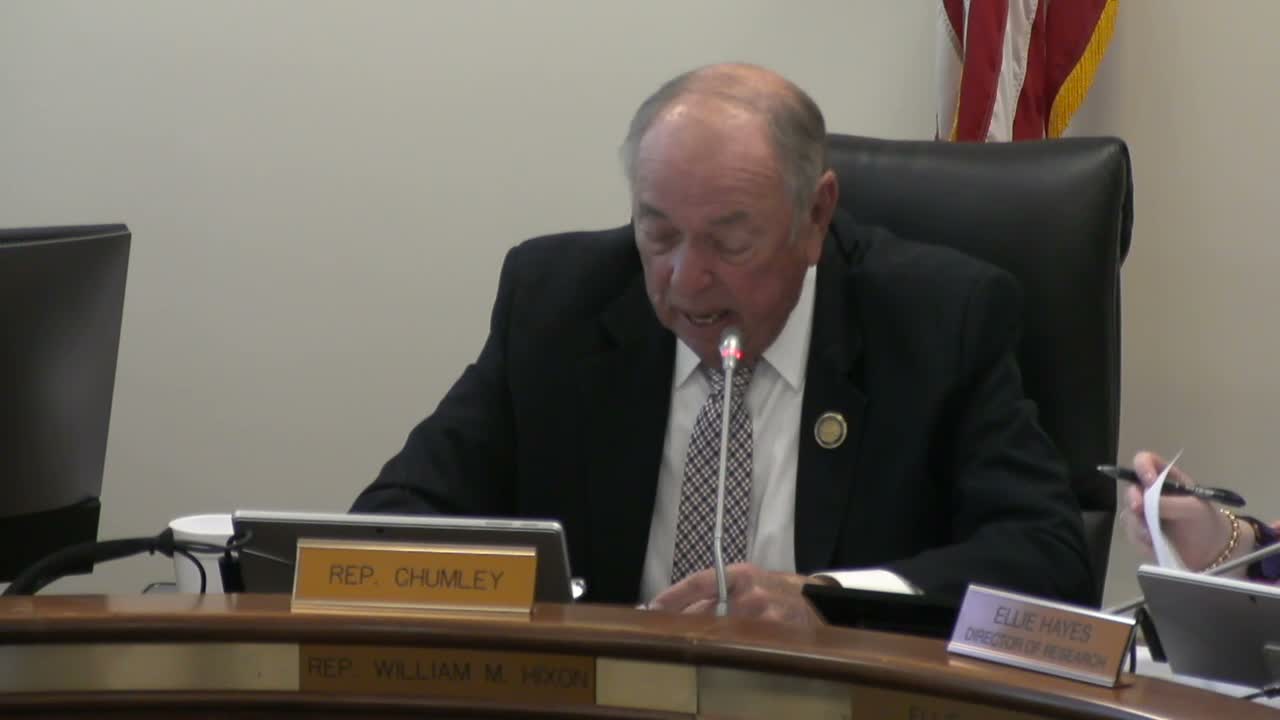
Representative (presenter) introduced H.4624, described as the South Carolina Clean Air Act, saying the bill aims to prohibit or restrict stratospheric aerosol injection and similar geoengineering activities over the state. The presenter framed the topic as a growing public concern and asked the committee to hear expert testimony.
Multiple witnesses addressed the committee. Dane Wigginton called climate engineering "not cloud seeding" and described alleged tests showing nanoparticle dispersals, urging the committee to investigate immediately. "Climate engineering is not cloud seeding," Wigginton said, and he characterized the issue as an existential threat.
Matthew Kennedy, a resident and author of a written report he provided to committee staff, presented a contrails analysis arguing that persistent streaks in the sky cannot be explained solely by jet‑exhaust physics under typical South Carolina atmospheric humidity and that the committee should seek accredited atmospheric experts to evaluate the phenomenon.
Dr. Denise Sibley, a physician, told the committee she relied on government research plans and budget language and concluded that stratospheric aerosol injections have occurred and pose health and ecosystem risks. "This is not whether it is. It is happening," she said, and cited potential respiratory and environmental impacts.
Other constituents described soil testing with elevated aluminum and barium and declining pollinator populations; several witnesses urged prompt scientific review. Committee members said they wanted a science‑based review and more time to question experts. The committee voted to adjourn debate on H.4624 and to seek further study and expert input, recording a 5–0 voice result with two members not present.