
Committee hears broad debate on AI oversight bill; industry warns of unintended consequences
Get AI-powered insights, summaries, and transcripts
Subscribe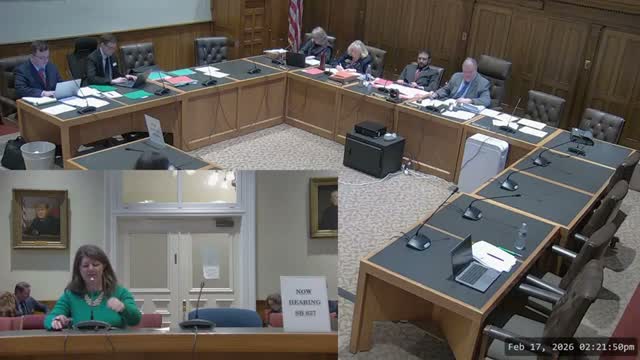
Summary
SB 657 would create an AI oversight position in the attorney general’s office, a civil right of action for some deceptive uses of AI, and a study commission; telecom stakeholders urged a narrower approach, warning the bill may be overly broad and could capture routine business uses of AI.
Senate Bill 657, introduced by Senator Rebecca Perkins Cuoco, would establish an artificial intelligence oversight position in the attorney general’s office, create a civil right of action for certain deceptive uses of AI and encourage creation of a study commission. The sponsor described the bill as an initial draft to protect residents and businesses from certain harms arising from AI use.
Committee members questioned the bill’s scope and raised First Amendment and enforcement questions. Senator Reid suggested the Department of Employment Security might be a better fit than the Department of Labor for tracking job impacts. Several senators flagged lines in the draft that they said could bind future legislators or raise constitutionally sensitive matters.
Maura Weston, representing the New England Connectivity and Telecommunications Association (NECTA), cautioned that the bill’s definitions and prohibited-conduct sections are broad enough to capture a wide range of benign or beneficial uses of AI, including network maintenance, customer-service chatbots and personalization features. Weston said the bill’s cause-of-action language did not require plaintiffs to prove actual reliance and could expose companies to litigation even where no harm occurred.
Industry witnesses also cautioned that the bill could risk federal funding tied to broadband deployment (BEAD) if a state regulator’s actions were deemed objectionable under federal guidance. Lawmakers and the sponsor discussed narrowing definitions, adding stakeholder representation on the study commission and clarifying affirmative defenses for First Amendment-protected uses.
No final vote was taken; senators asked for clarifying language and additional stakeholder input as the committee considers next steps.