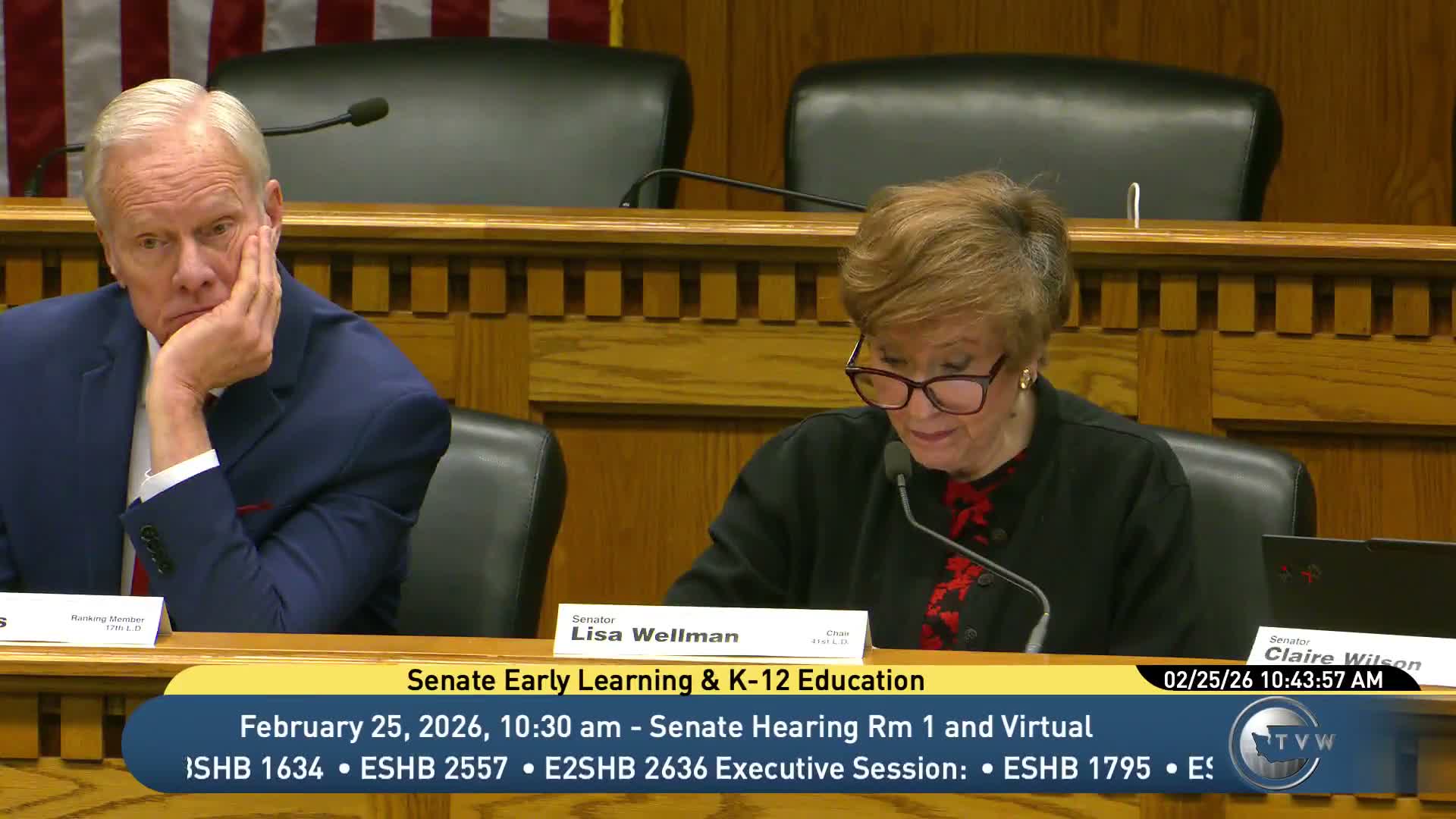
Committee adopts amendment loosening implementation requirement for literacy standards, flags district cost concerns

Early Learning & K–12 Education Committee · February 25, 2026

Get AI-powered insights, summaries, and transcripts

Subscribe
AI-Generated Content: All content on this page was generated by AI to highlight key points from the meeting. For complete details and context, we recommend watching the full video. so we can fix them.

Summary

Members adopted a striking amendment to Engrossed Substitute House Bill 1295 that removes a district implementation mandate for a comprehensive literacy program and instead incorporates core curriculum standards; staff said the bill contains no state funding and districts may face costs to adopt compliant curricula.

The Early Learning & K–12 Education Committee adopted a striking amendment to Engrossed Substitute House Bill 1295 (transcribed as "12 95") that removes a requirement that school districts implement a comprehensive literacy program and instead incorporates the program’s core components into curriculum standards for new or updated literacy materials beginning in 2027.

For the record, Elena Becker, committee staff, told the committee the substitute bill would require new or updated literacy curriculum to include language comprehension, orthographic knowledge, phonological awareness, vocabulary and oral language development, and require curriculum to be diagnostic and responsive to individual student needs. Becker said the amendment removes a continuing education requirement for educators endorsed with literacy‑related competencies and removes the separate requirement for schools to implement a comprehensive literacy program while incorporating key program requirements into curriculum standards.

Several members raised concerns about costs to districts. The chair and other senators noted the bill contains no language requiring state funding and is not subject to appropriations; Becker confirmed she saw no language that would require the state to provide funds. One senator said the draft remains, in their view, an unfunded mandate to districts; another senator asked and staff confirmed that if the striking amendment were adopted, the requirement for districts to implement the program would be removed.

The committee adopted the striking amendment labeled C and later moved to give the bill a due‑pass recommendation and send it to the rules committee; the chair announced the bill had "passed subject to signatures." The transcript records voice votes; no roll‑call tally appears.

Next steps: HB 1295 (as transcribed) will go to the rules committee for further action; staff and members flagged potential district implementation costs that would depend on local adoption choices and purchasing of new curricula.