
WFP and FAO warn Somalia faces worsening hunger as funds run out; WFP says aid could stop by April
Get AI-powered insights, summaries, and transcripts
Subscribe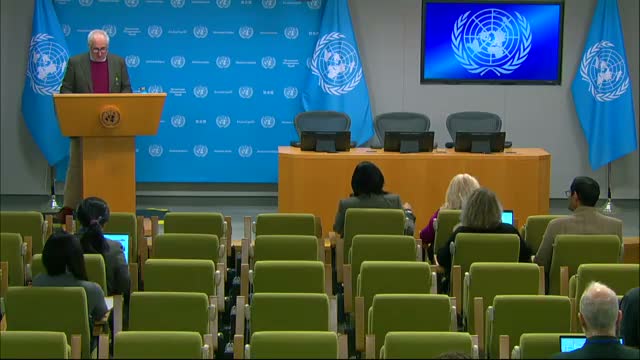
Summary
WFP and FAO officials told a UN Correspondents Association briefing that 6.5 million Somalis face crisis‑level hunger, FAO needs $85 million for rural relief, and WFP has an immediate $95 million shortfall that could force most operations to stop by April without new funds.
WASHINGTON — Officials from the World Food Programme (WFP) and the Food and Agriculture Organization (FAO) told a United Nations Correspondents Association briefing that Somalia’s hunger crisis has intensified and that severe funding shortfalls threaten life‑saving food, nutrition and cash assistance.
Ross Smith of WFP said "6,500,000 people, a third of the population facing crisis levels of hunger through March," and described a rapid deterioration since January. He said WFP assistance has fallen from 64 districts to 42, leaving whole areas without food aid, and that the agency is currently "only assisting just over 600,000 of the 6,500,000 people facing crisis levels of hunger." Without more funding, Smith warned, "we will be stopping most of our activity by April without additional resources."
Rain Paulson of FAO said the crisis has a particularly severe agricultural and rural dimension, noting that the last major cereal harvest was 83% below the long‑term average and that livestock births and seed stocks have been sharply reduced. Paulson said FAO needs "$85,000,000 U. S. Dollars to support 1000000 of the most vulnerable, high risk, underserved rural people at the moment" and that FAO has received only $6,000,000 so far.
The officials said the recent Integrated Food Security Phase Classification (IPC) report underpins the figures they presented and that two failed rainy seasons, coupled with conflict and displacement, have pushed the humanitarian response to the brink. Paulson described the situation as "primarily a rural crisis," with roughly half of the 6.5 million people in crisis depending directly on agriculture and livestock for survival.
In a question‑and‑answer session, Edith Lederer of the Associated Press asked whether the international community was mobilizing support comparable to the 2022 response. Smith said he was "not seeing that rally," and told reporters WFP faces "an immediate shortfall of $95,000,000 for our programs" and that delayed response is costlier and saves fewer lives.
Pamela Falk of U.S. News & World Report asked about malnutrition treatment and displacement. Smith said WFP works closely with UNICEF on nutrition treatment and prevention but that those activities face funding pressure. Paulson said analysis estimates about 212,000 people were internally displaced by March because of drought and that around 36% of displacement is linked to conflict.
Gabriel Ozando of Al Jazeera asked what a shutdown of services would mean on the ground. Smith said the April risk refers to the emergency assistance pipeline: the roughly 600,000 people getting targeted monthly emergency aid would be at risk of losing that support, and "very small component, perhaps 40,000 would extend for 1 to 2 months additional." He emphasized that early funding is more effective at saving lives and protecting livelihoods than late, larger interventions.
The agencies urged donors, international financial institutions and partners to mobilize quickly to scale life‑saving interventions and livelihood protection. The briefing closed with an invitation for the presenters to return to the forum and for continued engagement on Somalia’s unfolding humanitarian needs.