
Augusta committee recommends manager government, independent internal auditor and stronger ethics in updated charter
Get AI-powered insights, summaries, and transcripts
Sign Up Free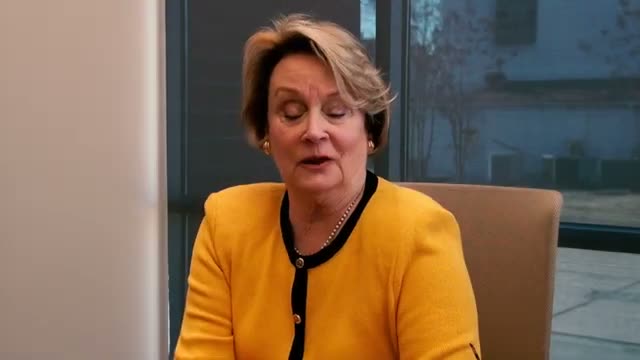
Summary
The Augusta Charter Review Committee unanimously recommended shifting to a commissioner-manager form of government, creating a funded internal audit office with an oversight committee, and embedding enforceable ethics standards in the charter; the draft will be finalized and sent to the Augusta Commission and the Georgia General Assembly before any public vote.
The Augusta Charter Review Committee on its informational video and statements recommended three major charter changes: adopting a commissioner-manager form of government, creating an independent internal audit function with guaranteed funding and oversight, and adding enforceable ethics language that frames public officials as fiduciaries.
In an overview, an unnamed committee representative said the 11-member panel reviewed the 1996 Augusta Charter and charters from other governments and worked with the University of Georgia Carl Vinson Institute of Government to draft revisions intended to remove redundancies, shift appropriate matters to ordinance, and clarify the local government’s foundation and lines of authority.
“My name is Clint Bryant. I’m the vice chair of Augusta Charter Review Committee,” Bryant said, arguing the committee unanimously recommended “transitioning to a commissioner manager form of government, making the mayor and commission responsible for policymaking” while a professionally credentialed manager handles daily operations and personnel decisions. Bryant and the committee said the manager would oversee day-to-day operations, hire and fire department heads, set departmental budgets for commission approval, and hold department leadership accountable.
Clarence Lee Powell, chairman of the committee’s finance subcommittee, said the panel recommended establishing an independent internal audit department to provide objective reviews of government operations, rebuild public trust, and supplement the required external annual financial audit. Powell noted that “the required state audit for fiscal 2024 has not, at this time, been completed to the state” and that “the fiscal year 25 audit will be due 06/30/2026.”
Powell detailed the charter language the committee adopted: a five-member audit oversight committee including the mayor, the mayor pro tem, the chair of the commission’s finance committee, and two at-large residents appointed by the governing body; an internal auditor appointed by a majority vote of the commission; and auditor qualifications that may include certifications such as certified internal auditor or certified public accountant, an advanced degree, and at least five years’ government auditing, evaluation, or analysis experience. The proposed internal auditor would follow government auditing standards and have authority to conduct financial and performance audits of all departments, offices, boards, activities, agencies, and programs in Augusta. Final audit reports would be shared with audited departments, the manager, the oversight committee, the commission, and the public, and the internal auditor would verify follow-up actions.
Committee member Sheffy Robinson said the proposed ethics language moves ethics “from implication to obligation” by designating public officials as fiduciaries, requiring public disclosure of financial interests and recusals when appropriate, and directing ordinances to prevent nepotism and regulate procurement. Robinson said the language attaches proportional consequences for violations, including voidable contracts and bar from future service in some instances, with the stated goal of prevention and durable accountability rather than relying solely on criminal penalties after misconduct.
The committee also voted unanimously to require a formal charter review every seven years after a new charter takes effect to address future issues. The committee stressed that its role is advisory: the finalized charter draft will be presented to the Augusta Commission and the Georgia General Assembly for approval; if approved, the governor’s signature and a scheduled election would be required for residents to vote on the new charter.
The committee credited the University of Georgia Carl Vinson Institute of Government for research and assistance with drafting. Next procedural steps described by committee members are finalizing the charter document, presenting it to the Augusta Commission and the state legislature, and—if the legislature and governor approve—placing the charter before voters.