Augusta Charter Review Committee backs switch to commissioner–manager government, votes for seven‑year charter reviews
Loading...
Summary
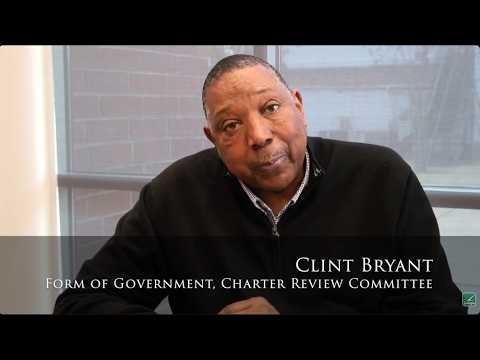
Vice Chair Clint Bryant said the committee unanimously recommended moving Augusta City to a commissioner–manager form to clarify authority, centralize operations under a professional manager and require charter reviews every seven years; the transcript records rationale but not next procedural steps.
Clint Bryant, vice chair of the Augusta Charter Review Committee, told the committee the panel unanimously recommended transitioning Augusta City to a commissioner–manager form of government to clarify lines of authority and responsibility. "This is why we have selected the manager form of government to clarify those lines of authority and responsibility," Bryant said.
The committee presented the change as a structural shift that separates policymaking and day‑to‑day operations: under the recommendation, the mayor and commission would set policy and a professionally qualified manager would oversee daily operations, hire and fire department heads and be accountable to the commission. "The manager will fully oversee all 28 departments for the consolidated government, set their budgets, which will be approved by the commission," Bryant said.
Bryant argued the manager form would allow commissioners to focus on strategic priorities while the manager handles operational details, improving planning, supervision and accountability. He said the committee reviewed research it believes shows manager‑led governments are generally more efficient and have lower levels of corruption. "Research shared with committee demonstrated that manager led governments were generally more efficient and effective," he said.
The committee also reported specific deficiencies the change is meant to address. Bryant said the current commission structure, which he described as consisting of 10 commissioners and the mayor, often mixes policy and operational decision‑making and can slow decisions and risk mismanagement. He noted performance reviews have not been conducted consistently across departments and in some instances "not in 8 or 9 years," a gap the proposed manager role would be expected to fix.
In a separate but related action, the committee voted unanimously to require a charter review every seven years after a new charter takes effect. Bryant said a new charter review committee would conduct future reviews to identify needed revisions in a timely fashion and that the committee's cleanup work—removing charter provisions duplicative of state law and moving certain topics into the code of ordinances—was intended to streamline governance documents.
The transcript records the committee's recommendations and rationale but does not record subsequent procedural steps, such as whether the proposals will be forwarded to the city commission for consideration or placed on a ballot. The committee's statements and votes were presented by Bryant in the recorded remarks; no other speakers or outcomes are recorded in this transcript.