
Martin County CRA reviews final Rio Civic Center concept and Dixie Highway streetscape, public input favors traffic calming and shade
Get AI-powered insights, summaries, and transcripts
Sign Up Free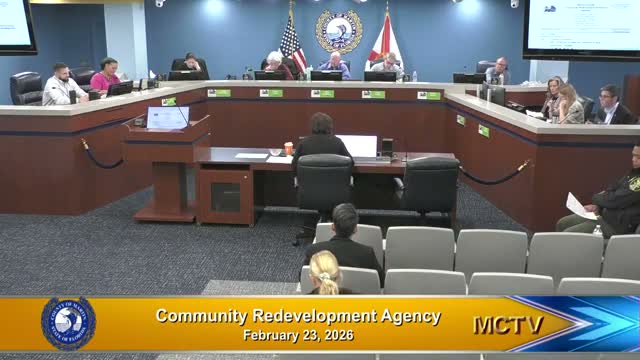
Summary
Marlin Engineering presented final concepts for a redesigned Rio Civic Center and a Dixie Highway streetscape plan that prioritize a larger civic building, pedestrian access, and traffic calming; residents urged 25 mph limits and environmental protections.
Marlin Engineering and its design partner presented final concepts for the Rio Civic Center master plan and the Dixie Highway streetscape to the Martin County Community Redevelopment Agency on Feb. 23, 2026. The plan pairs a larger civic building and plaza-style plaza space with multimodal improvements on Dixie Highway aimed at slowing traffic and improving pedestrian safety.
The presenter, Christina Fuhrman, said the Civic Center parcel study area includes existing civic uses and adjacent County-owned parcels. She described a preferred site layout that would increase the civic building’s footprint to roughly "just under 8,000 square feet," add a wrap-around porch and sheltered pavilion, and create a convertible paved plaza that can close for farmers markets and events. "We are doing this in conjunction with the streetscape plan," Fuhrman said, noting the design reflects public input favoring Florida vernacular architecture and active community uses.
Why it matters: designers and residents framed the two projects as a linked investment in neighborhood vitality and safety. Public outreach conducted over several meetings and at Winterfest found interest in community events, gardens and outdoor gathering space at the Civic Center, and strong support for shade trees and traffic-calming measures on Dixie Highway.
Key elements and trade-offs cited by the presentation include: - Civic Center: a two-story central gathering hall, storage and office space, improved restrooms and a porch-facing street/park; a conceptual mixed-use building on the eastern parcel that is not deed-restricted to civic use. - Dixie Highway streetscape: recommendations to reduce the target speed to 25 mph, install wider (8–10 ft) sidewalks where feasible, add mid-block crossings and raised intersections, patterned pavement as a traffic-calming measure, median islands with street trees, and on-street parking in some segments. - Accessibility and flood resilience: the design reflects an elevated building platform and ADA-compliant ramping to address a flood-prone site.
Presenters emphasized constraints. Fuhrman told the CRA the study area includes narrow right-of-way segments (near the Florida East Coast Railway) where the design can only widen one side of the sidewalk without easements. She said some segments will require easements or minor alignment shifts to deliver a continuous 10-foot sidewalk and noted the team is finalizing cost estimates.
Board and public reaction concentrated on utility relocation, trees and safety. A board member asked whether planned street trees would grow into overhead power lines; Fuhrman replied the team is applying a "right tree, right place" standard and will avoid tall-growing species near lines. Several speakers urged burying utilities in high-use pedestrian areas, but the presenter flagged undergrounding as "a significant cost." Resident Pam Burnell raised environmental concerns, asking how gopher tortoise dens and other wildlife will be protected during permitting.
Next steps: staff will incorporate today’s board comments into the final reports, finalize cost estimates, and pursue policy adoption and design procurement. The CRA did not take a formal vote on the designs at the meeting; Fuhrman said the team will return with more detailed documents and easement information as part of the next phase.