
Sponsor asks Maryland to authorize historical horse‑racing terminals to shore up OTPs; casinos push back
Get AI-powered insights, summaries, and transcripts
Subscribe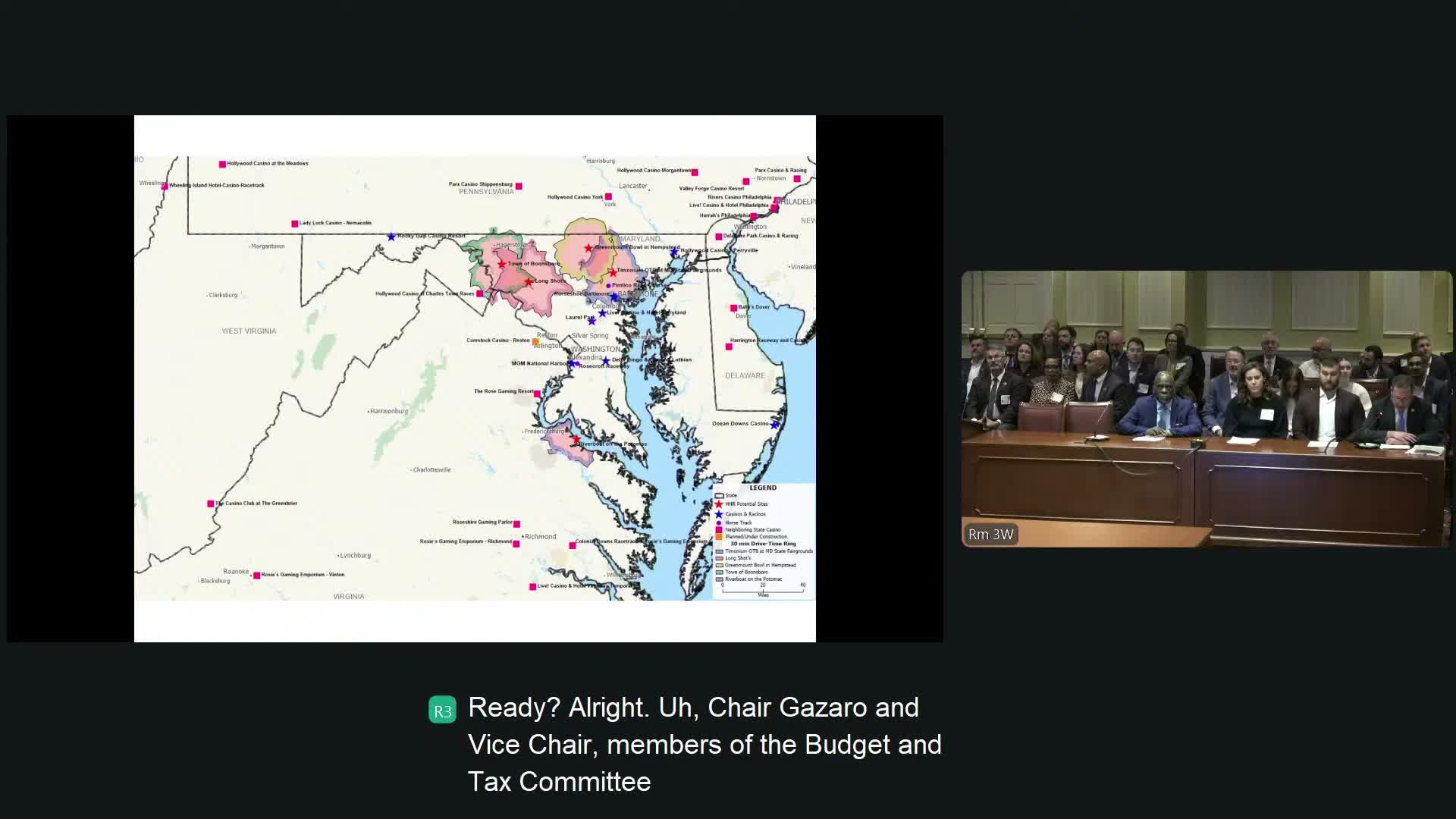
Summary
SB 639 would authorize Historical Horse Racing (HHR) terminals at off‑track pari‑mutuel facilities and other venues, with proponents saying HHR will stabilize locally owned OTBs and generate state revenue; casinos oppose the bill, warning it would cannibalize VLT revenues and disadvantage existing licensees.
Sen. Paul Quarterman told the Budget and Taxation Committee SB 639 would authorize historical horse‑racing terminals across the state — up to the cap in the bill — to shore up off‑track pari‑mutuel facilities (OTPs) and preserve jobs in rural communities.
"This year's legislation... would authorize place with the HHR machines throughout the state of Maryland," Quarterman said, noting the sponsor's estimate of up to 4,000 machines and DLS projections that a more conservative deployment could produce tens of millions in new state revenue. Quarterman emphasized that many OTPs are locally owned and minority‑ or women‑owned and that HHR has supported purses and jobs in other states.
Owners of Maryland OTPs told senators they are struggling and described HHR as a lifeline. Elise Cohen, owner of Long Shot’s OTP in Frederick County, said OTP revenues are down "nearly 40% over the past several years" and argued HHR is a proven way to generate jobs, increase racing purses and keep gaming dollars in‑state.
Casinos including MGM and Caesars testified in opposition. Marta Harding, representing MGM National Harbor, told the committee the player experience on HHR machines resembles the VLTs on casino floors and warned the state's proposed tax difference would shift revenue out of higher‑tax casino operations into lower‑tax HHR venues. "They look the same," Harding said of HHR and video lottery terminals.
Sponsor and OTP proponents disputed the cannibalization argument and pointed to Virginia's experience, where HHR terminals co‑exist with casinos and generated material purse increases and local job growth. Quarterman said Maryland Lottery VLT revenue near Virginia HHR openings showed only modest year‑to‑year shifts and argued that distance between facilities and different customer experiences reduces direct competition.
The bill as drafted also includes a referendum requirement after an attorney‑general opinion that authorizing HHR constitutes an expansion of commercial gaming. Committee members pressed both sides on the fiscal note, the likely distribution of new revenue, and how the bill would protect existing licensees and racing purses.
The hearing record includes substantial testimony from proponents and opponents but no final committee vote in the transcript.