
Elections modernization drives State Board of Elections’ FY27 request as DLS seeks quarterly IT oversight
Get AI-powered insights, summaries, and transcripts
Subscribe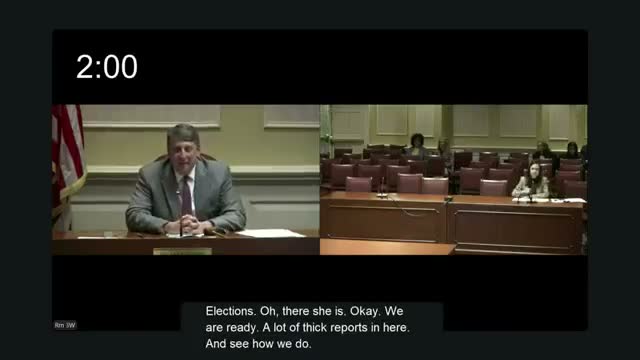
Summary
DLS told the Budget and Taxation Committee the State Board of Elections’ FY27 allowance is $69.7 million, a 21.5% increase largely driven by major IT projects — including a $30–40 million poll book modernization and a $100–125 million voting system — and recommended quarterly reporting on IT expenditures.
The Department of Legislative Services told the Budget and Taxation Committee that the State Board of Elections’ fiscal 2027 allowance totals $69.7 million, a $12.3 million (21.5%) increase over the fiscal 2026 working appropriation. Natalie Andrade, the presenting analyst, said the increase is primarily driven by major information-technology implementation costs for local boards and investments in voting equipment.
Andrade detailed two fiscal 2026 deficiencies included in the allowance: $595,000 for warehouse lease reimbursements to local boards that relocated to leased facilities, and $1,000,000 to address higher-than-anticipated vendor costs for the new campaign reporting information system. "The first deficiency of $595,000 supports warehouse lease reimbursement for several local boards of elections that have relocated due to inadequate facilities," Andrade said, and described the second as covering vendor costs that exceeded original estimates.
DLS identified four large IT projects that together account for much of the added funding: a statewide poll book modernization (estimated $30 million to $40 million), a new voting system (estimated $100 million to $125 million), the new campaign reporting information system (NCCRIS), and a voter registration and election administration modernization effort. Andrade said the poll book contract was approved in December 2025 but will not be ready for 2026 elections and full implementation is targeted for the 2028 presidential election. She also warned that SBE and implementing partners should assess contingencies if vendor performance or federal certification timelines slip.
An agency representative who described herself as having been "state administrator" said a previously selected poll book vendor was in noncompliance and the contract was canceled. "We had to cancel that contract," she told the committee, and said a new procurement is now under way and the implementation timeline is on track for 2028. The representative also explained that early-voting and mail ballots are now tagged to precinct-level data beginning with 2022 and 2024 cycles, but earlier elections cannot be retroactively corrected.
DLS recommended the committee adopt narrative language requesting quarterly reports on major IT development activities and expenditures to improve legislative oversight. The analyst also asked the Board to explain coordination with DUET and whether DUET will maintain oversight as projects move into implementation and operations.
The presentation and follow-up questioning underscored two themes for the committee: the scale and multi-year nature of election-technology investments and the need for continued oversight and contingency planning if vendor schedules or federal certification timelines delay readiness for future election cycles. The committee did not take a vote on the allowance at the hearing; DLS asked SBE to provide further comments and quarterly status reports on the projects.