Senate bill would let charter counties exceed tax caps by majority vote to fund public safety
Loading...
Summary
Sen. Ben Kramer's SB 520 would authorize—not require—charter counties to override tax caps by a simple majority of a county council to fund approved public-safety budgets; county and public-safety leaders supported the permissive tool as a way to address rising operational and staffing costs.
Sen. Ben Kramer introduced Senate Bill 520, saying the measure "authorizes, but this is what's important. It does not mandate a charter county to override its charter imposed property tax limitation by a simple majority vote of the county council for the limited... purpose of funding the county's public safety budget." Kramer said the bill gives local officials an additional tool—not a mandate—to meet core public safety obligations.
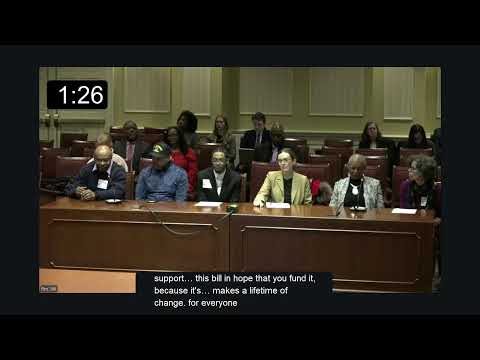
The bill's sponsor and county officials emphasized parity with education funding rules. Rich Maddalino, chief administrative officer of Montgomery County, told the committee that counties "exist solely with the powers and duties that you have provided us" and urged a favorable report so local elected officials can fund public safety without cutting other services.
Labor and public-safety organizations also backed the bill. Lisa Titus, recorder for UFCW Local 1994, said the measure recognizes that modern public safety includes 911 professionals, corrections staff and behavioral health responders. Jeff Fuddle, president of Professional Firefighters of Maryland, and Lee Holland of FOP Lodge 35 argued the bill preserves transparency and local accountability while allowing counties to respond to recruitment, retention and equipment needs.
Supporters repeatedly stressed the bill is permissive and "does not raise taxes," and that additional revenue would be restricted to approved public-safety purposes. No council or county was required to act under the legislation; proponents framed it as a narrowly tailored option for counties that hit charter tax ceilings.
The committee heard the testimony and took the measure under consideration; no formal vote on SB 520 was recorded in the transcript.
The next steps are committee consideration and any sponsor amendments; proponents said they are available to answer technical questions as the bill moves through the process.