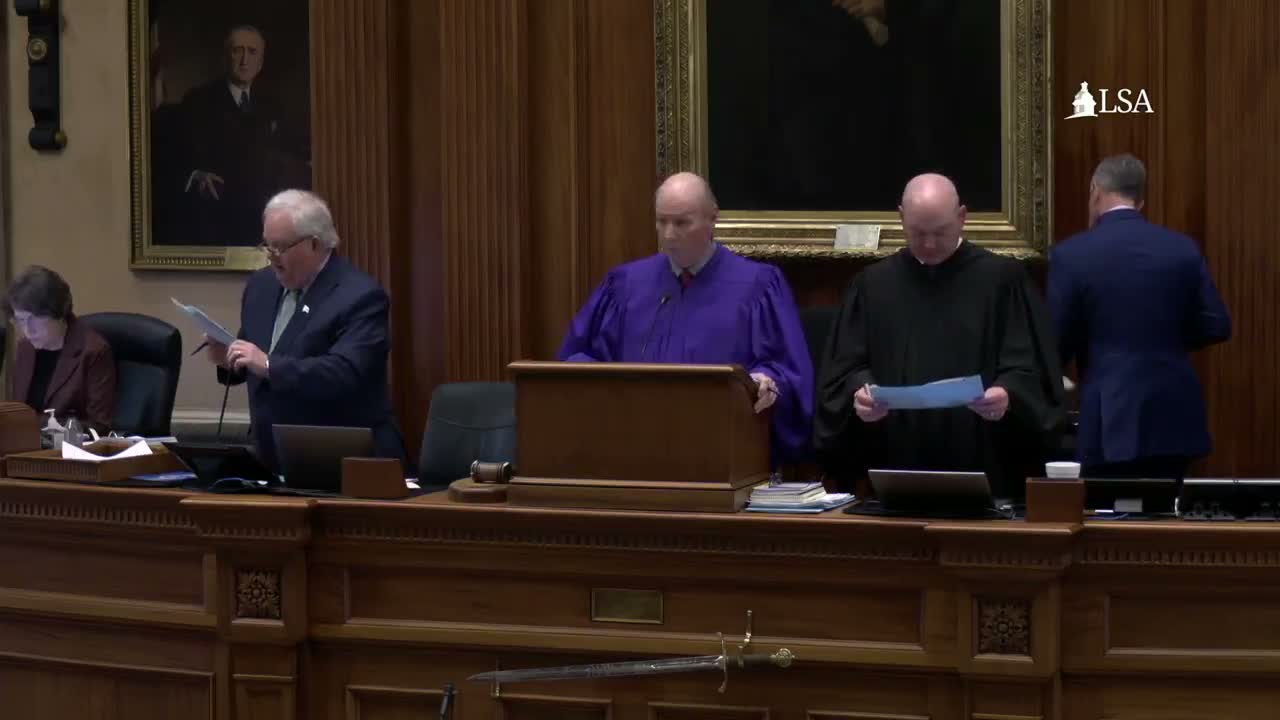
Senate moves to clarify abandoned-buildings tax credit after Department of Revenue ruling
Loading...
Summary
Senator Buford sponsored S853 to clarify the abandoned-buildings revitalization tax credit after a recent Department of Revenue interpretation that would have required historic income-producing status; senators discussed eligibility for churches, jails and schools and the bill received a second-reading vote.
Senator Buford introduced S853 on the Senate floor to clarify eligibility for the state’s Abandoned Buildings Revitalization Tax Credit after a Department of Revenue ruling that, he said, misread the statute.
Buford told colleagues the statute has long required that a building be nonoperational — not income producing — for five years before qualifying for the credit, and that the Department of Revenue’s recent opinion extended that requirement to demand that a building previously have been income producing at some point in its history. "That was never the way that this particular statute's been interpreted or utilized for 13 years," Buford said, adding that he worked closely with Habitat for Humanity in drafting the clarification.
The bill would remove language that the Department of Revenue had read to require historical income-producing use and would preserve the five‑year nonoperational requirement prior to an application. Buford said the change is intended to protect longstanding applicants such as churches, schools and jails that have historically been accepted under the program. He noted the Department delayed enforcement of its opinion until June 1 to allow the legislature to act.
Senators questioned whether a building that never received a certificate of occupancy would qualify and whether the change would expand the credit beyond its original intent. Buford replied the bill does not change structural-condition requirements; it simply affirms that inherently non–income producing buildings are eligible if they have been closed or nonoperational for the five‑year period required by statute. He also referenced a previously raised project cap: "We increased the cap on the amount of the credit that could be taken, I think, to $700,000 for any one project," he said.
Senators from multiple regions praised the credit’s revitalization role in small towns. After questions and explanations, the Senate recorded a second-reading vote on S853; the clerk reported the bill would receive a second reading of the Senate by a recorded vote of 44 to 0.
Next steps: the bill was moved forward for further consideration on the Senate calendar. If enacted, the change would clarify eligibility and prevent the Department of Revenue’s recently announced interpretation from applying retroactively to prior awards.
Quote attributable to a speaker in the transcript: "The Department of Revenue issued a ruling this year, but delayed enforcement of it until June 1 so we can clear things up," Senator Buford said.