
House Corrections and Institutions directs DOC study after debate over free inmate calls in H.294
Get AI-powered insights, summaries, and transcripts
Subscribe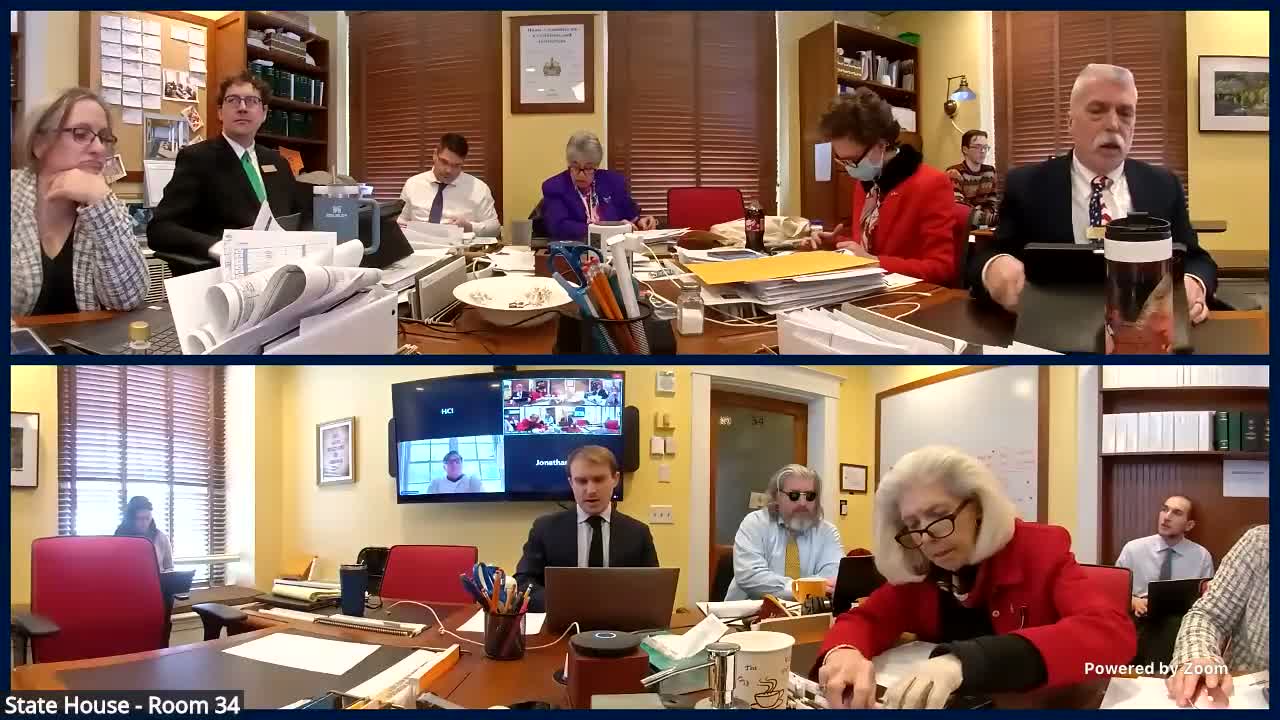
Summary
The House Corrections and Institutions committee on Feb. 25 considered H.294, which would require telephone, video and other communications services for incarcerated people be provided "at no expense" to them or to their callers. Lawmakers voiced support for connections that may reduce recidivism but raised cost, cap and funding concerns and asked the Department of Corrections to produce a detailed evaluation.
The House Corrections and Institutions committee on Feb. 25 reviewed H.294, a bill that would amend Title 28 to require telephone, video and other communication services in state correctional facilities "at no expense" to incarcerated people.
John Gray of the Office of Legislative Council told the committee the bill would "change that to at no expense to the inmate," and that the same change was proposed across multiple subsections of the statute. Gray said subsection d could be used to extend the prohibition on passing charges to families and others communicating with inmates.
The bill prompted a technical-language discussion about when the entitlement would apply. Committee members and the Department of Corrections representative, Hailey, agreed that replacing the statutory phrase "upon admission" with operational wording such as "upon intake" or language that applies while a person is housed in a facility would be clearer. Hailey said booking areas typically allow one phone call during intake and that attorney lines are already provided free of charge.
Committee members pressed on likely costs and funding. Hailey told the committee a DOC document projects roughly $406,000 per year under current phone and video use; she warned other states have seen usage — and costs — rise if free unlimited calls or video become available. "It is a collect call, so it's at no expense to them, but it is not an expense to the recipient," Hailey said, describing current intake practice.
Supporters argued the change would remove a financial burden from families and could support connections that reduce recidivism. "By keeping that connection, it's gonna reduce recidivism," Representative James said in committee discussion. Opponents and cautious members urged fiscal restraint: Mary and others cited prior pilot programs that "went right through the roof" on usage and asked for caps, pilot testing, or clear funding sources before a full rollout.
Members floated several funding and control options. Some suggested diverting unexpended commissary revenue to offset telecom costs but DOC staff cautioned that commissary spending decisions are typically decided at the facility level by incarcerated people and recommended surveying that population before reallocating funds. Committee members also discussed a pilot limited to out-of-state populations (noted by members as, for example, beds in Mississippi) to test usage and impacts. Several members raised the option of having the Public Utilities Commission review telecom rates if the committee moves toward treating the service like a utility.
The committee discussed per-unit charges under existing contracts and vendor testimony. Committee members cited current published rates discussed in testimony and handouts: phone calls at roughly 2¢ per minute, tablet video at about 16¢ per minute and tablet messaging at roughly 25¢ per message. The current DOC contract runs through February 2029 with two optional one-year extensions.
Rather than vote on substantive statutory language, the committee reached consensus on directing DOC to produce a comprehensive evaluation. The requested evaluation will include detailed cost modeling and comparative fiscal analysis of alternative telecommunications models, feasibility and implementation considerations for a state-funded/no-cost model (including analysis of limiting by phone only vs. phone and video), potential cap options, identification of potential funding sources (including commissary revenue), and any statutory changes required. Committee counsel said the evaluation should also consider consulting the Public Utilities Commission and coordinating with the Justice Oversight Committee as appropriate.
Next steps: the committee asked legislative counsel and DOC to draft evaluation language and expected DOC to deliver an analysis and recommendations on a timeline the committee will set, with a follow-up discussion planned after the evaluation is circulated. The committee recessed for lunch and said it would resume at 1:00 p.m. to continue work on H.294 and related items.
Sources: Committee hearing transcript; statements by John Gray (Office of Legislative Council) and Hailey (Department of Corrections).