
Bill would require Maryland to report aggregated women's health-care cost data, sponsors say
Get AI-powered insights, summaries, and transcripts
Subscribe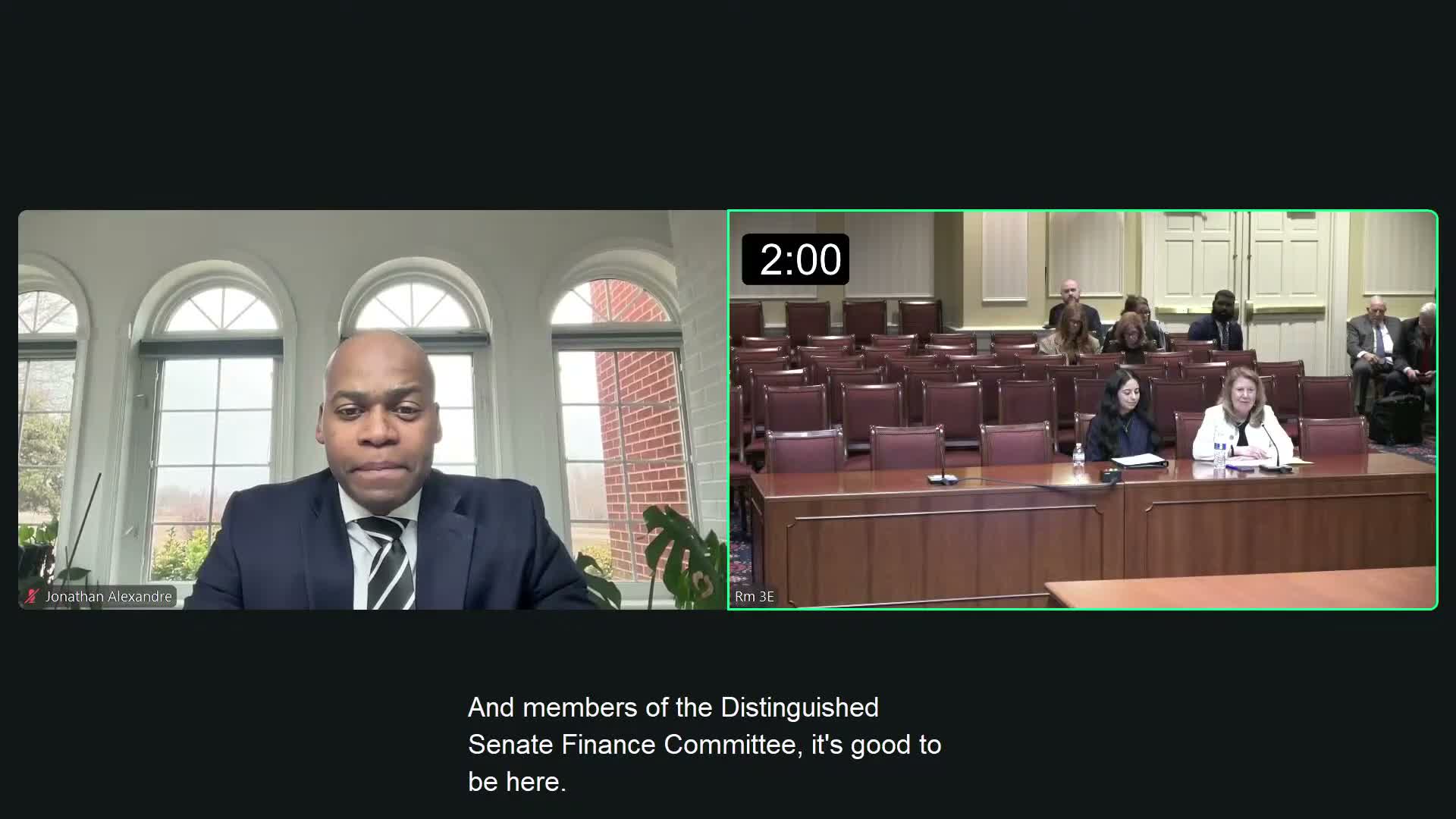
Summary
SB 485 would require annual aggregated cost reporting on prenatal, birth, postpartum, pregnancy, abortion, menopausal and related mental-health services to inform policy and reveal disparities; sponsor emphasized privacy protections and said 47 states already report similar data.
Sen. Mary Beth Caroza told the Senate Finance Committee that SB 485 would direct the Maryland Department of Health to collect and publish aggregated cost data across a range of women's health services — prenatal, birth, postpartum, pregnancy care, abortion, menopausal care and related mental-health services — while maintaining privacy protections for patients.
Caroza said the bill is intended to "promote transparency and accountability in women's health care spending" and to help policymakers identify cost drivers, geographic and racial disparities and gaps in access. She cited Maryland maternal-mortality figures and higher mortality among African American mothers to underline the need for more granular fiscal data.
Witnesses from the Maryland Catholic Conference, the Maryland Family Institute, and other groups spoke in support, noting the experience of other states. Committee members asked whether provider availability and workforce data would be included; the sponsor said the measure focuses on cost analysis but that implementation could help reveal provider shortages and access issues. Jonathan Alexander (Maryland Family Institute) urged the committee to collect standardized utilization and cost data to make funding decisions more transparent.
Supporters emphasized safeguards: the sponsor repeatedly stated the legislation would not authorize disclosure of patient-identifiable information and would comply with state "shield laws" referenced in testimony. Opponents' written testimony was acknowledged and sponsor said she would follow up with concerns from provider groups.
The committee heard the panel and closed the hearing without a vote; the sponsor asked for a favorable report and offered to work with stakeholders on technical amendments.