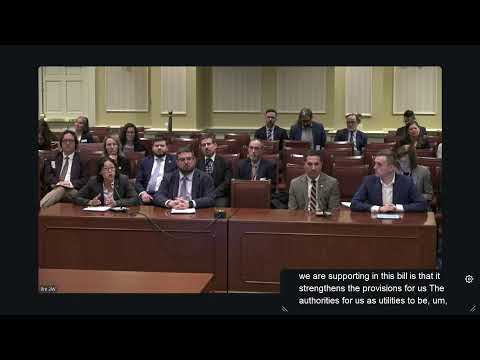
Lawmakers hear broad support and industry caveats for electronics EPR bill
Loading...
Summary
SB 655 would update Maryland’s electronics recycling law to a modern extended‑producer‑responsibility (EPR) program. Local governments and recyclers urged action to fund collection and battery safety; manufacturers asked for 'clearinghouse' structures, narrower product scope and time to implement.
Senator Malcolm Augustine told the committee SB 655 would create an electronic device producer responsibility program to modernize and fund statewide electronics recycling. Testimony emphasized worker safety, landfill diversion, and the value of recovering rare earths and critical minerals.
Kitty McElroy of the Maryland Recycling Network said counties are struggling to fund current programs and identified thousands of tons of e‑waste still going to landfill. Richard Keller of Baltimore County described local costs and staffing needs for safe collection and packaging.
Supporters including waste‑sector trade groups and the medical community said the bill complements SB 553 (battery safety) and urged action to address lithium‑ion battery fires and toxic materials in e‑waste. The National Waste & Recycling Association and local authorities highlighted recent battery fire incidents in Maryland and nationwide.
Consumer Technology Association witnesses said they supported the bill "with amendments," urging a market‑driven approach, a focus on consumer household electronics, and careful design of the stewardship or clearinghouse mechanism rather than a single PRO model. Retailers also asked for time to review final language.
Senators and witnesses discussed scope, reporting, and whether the program should be consumer‑facing fees or harmonized into product prices; sponsors said the plan intends to harmonize costs into product pricing rather than an explicit point‑of‑sale fee. No committee vote was taken; stakeholders said they will continue to negotiate technical drafting.