Administration pitches 'Lower Bills and Local Power Act' with $70M gap funding and $100M bill rebates
Get AI-powered insights, summaries, and transcripts
SubscribeSummary
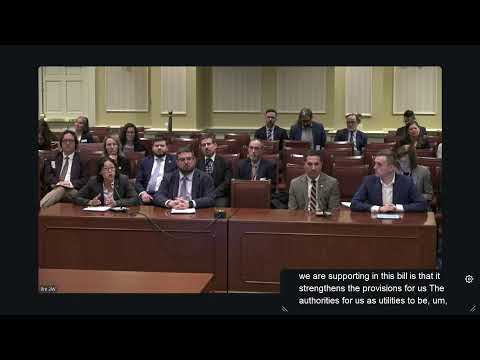
State officials, including MEA Director Kelly Speaks Bachman, urged a favorable report for SB 386, which would fund in‑state solar and storage projects, require grid-enhancing technologies and offer $100 million in direct bill rebates, while senators pressed for targeting and long‑term fund sustainability.
Maryland Energy Administration Director Kelly Speaks Bachman told the Education, Energy and the Environment Committee that the governor’s SB 386 — dubbed the Lower Bills and Local Power Act — targets immediate relief and longer-term solutions to rising electricity costs.
"There are four key pillars," Speaks Bachman said, outlining measures to support local generation, modernize infrastructure, hold utilities accountable and deliver immediate relief. She described a proposed $70,000,000 solar gap‑funding program administered by MEA to bridge financing shortfalls after federal tax incentive changes, and a $100,000,000 direct bill‑rebate program to help ratepayers in the near term.
Jeremy Baker, the governor’s chief legislative officer, framed the legislation as part of a regional, bipartisan effort to lower capacity prices and blamed delays in the PJM interconnection queue for higher wholesale rates. "The economics are simple. PJM has failed to meet the demand for energy supply and when supply is limited, prices go up," Baker said.
Private‑sector witnesses supported the bill’s emphasis on grid‑enhancing technology and market mechanisms. Rob Gramlich, who represents grid‑enhancing technology coalitions, urged prioritizing reconductoring and other advanced transmission technologies to unlock capacity without costly new rights‑of‑way. Developer testimony from Renee Steichen of REV Renewables described projects already permitted in Maryland and said targeted procurement and financing would speed construction and stabilize prices.
Committee members pressed administration and industry witnesses on program details. Sen. Jason Gallien and Vice Chair Kagan asked how the proposed funds interact with the Clean Energy Infrastructure Fund (CIF) and whether the $100 million rebate could be targeted to low‑income households. Baker and Speaks Bachman said they were open to amendments and that the rebate design was intended as a short‑term relief measure, while gap funding would prioritize "shovel ready" projects through a competitive reverse auction.
Senators also raised permitting and siting questions about a provision allowing expedited collocation of transmission on State Highway Administration rights‑of‑way. Administration staff said the language is intended to create authorization and an expedited framework, but that details and federal compliance requirements would be worked out with MDOT.
The committee did not vote on SB 386 at the hearing. Sponsors and administration representatives said they expect to continue negotiations with lawmakers on targeting the rebate dollars and on program design to protect ratepayers while accelerating in‑state clean generation.