
Portland SD 1J committee backs moving settlement-threshold change to full board, requests data on contract amendments
Get AI-powered insights, summaries, and transcripts
Subscribe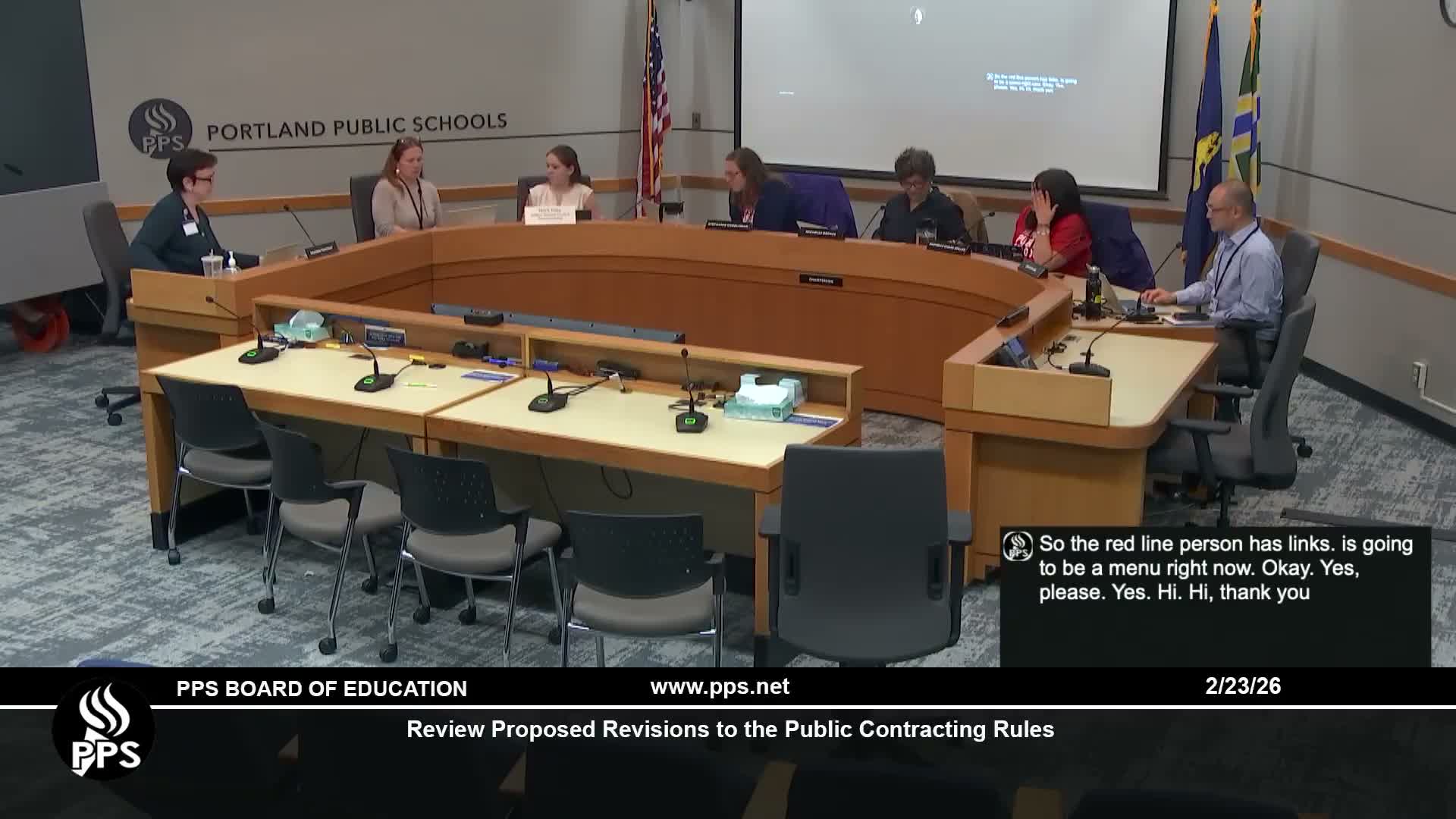
Summary
Staff proposed cleaning up PPS public contracting rules by removing an obsolete amendment-reporting requirement and aligning an offer-of-judgment threshold from $25,000 to $75,000; the committee agreed to move the settlement-threshold change to the full board and asked staff for data on cumulative contract amendments between 101% and 124.99%.
The Portland SD 1J Policy Committee reviewed proposed updates to the district's public contracting rules and directed staff to proceed with part of the package while collecting additional data on amendment reporting practices.
Emily Cortnidge, senior legal counsel and former director of purchasing, presented two primary changes: removing an obsolete amendment-reporting requirement that staff said creates confusion, and aligning the district's "offer of judgment" settlement threshold with the board's current settlement policy by increasing the authorization amount from $25,000 to $75,000.
Committee members asked for clarification on whether removal of the reporting requirement would change existing practice. Staff said the district's purchasing department has for years sent amendments that push a contract above 125% back to the board for approval; the reporting language was a leftover and its removal would bring the rules into alignment with the attorney general's model rules. Several members expressed concern about transparency and requested a staff report that describes how many contracts fall in the 101% to 124.99% amendment band so the committee can decide whether a targeted reporting requirement for that band would be appropriate.
The committee agreed to recommend to the full board the alignment of the offer-of-judgment limit (25k to 75k) and asked staff to gather and provide data on contracts with cumulative amendments in the 101'124.99% range. Staff explained the typical board process for rules: first reading at the full board, a 21-day public comment period, then a second reading and vote.
What happens next: staff will post corrected redlines, provide the requested data about amendment frequency and workload, and bring the offer-of-judgment alignment and any proposed language about reporting or amendment bands forward through the board's first and second reading process.