
Committee backs bill letting cities and charters vie first for closed school buildings
Get AI-powered insights, summaries, and transcripts
Subscribe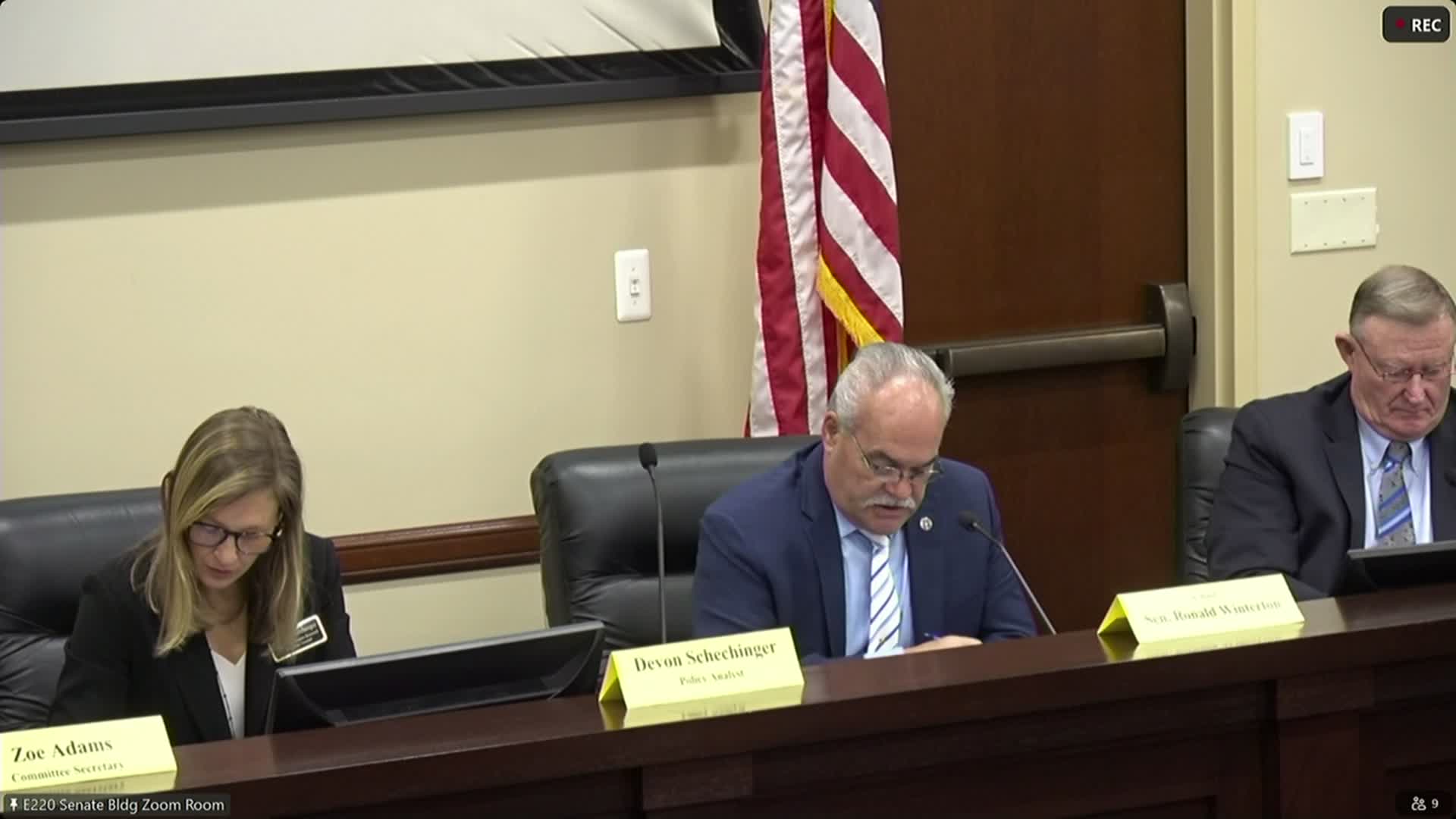
Summary
The committee favorably recommended Third Substitute House Bill 241 (3–1), a bill that gives cities parity with charter schools for first right of refusal on closing school buildings, requires charter-board oaths, and updates revolving fund language; supporters included charter and city organizations.
Third Substitute House Bill 241 was favorably recommended out of the Senate Government Operations Committee on a 3–1 vote after testimony from the sponsor and multiple local education and city stakeholders.
Representative Perucci said the bill creates parity by ensuring cities and charter schools each have a first right of refusal when a school building is being sold after a closure, noting a prior density standard had excluded many cities. She said the bill also requires charter-board members to take an oath of office similar to the state board of education and replaces the charter school revolving account with the charter school revolving funds established last year.
Royce Van Tassel of the Utah Association of Public Charter Schools told the committee stakeholders worked on the bill over months and welcomed the chance to keep closed school buildings in educational service to the community. Cameron Dale of the League (Utility) of Cities and Towns said the measure clarifies that all cities — not just a handful — can partner with districts to repurpose closed facilities for community uses.
Representative Perucci said buyers would need to purchase closing school buildings at fair market value and would be responsible for inspections and necessary upgrades. Committee members asked whether higher-education purchases were affected and the sponsor said she would work with members if unique university situations arose.
Senator Vickers moved the committee recommendation. After discussion and a waiver of summation by the sponsor the committee voted to favorably recommend HB 241, 3–1.