Get Full Government Meeting Transcripts, Videos, & Alerts Forever!
Get email alerts on the Charter Revision topic
No spam. Unsubscribe anytime.
Simsbury Selectmen Continue Charter Revision Hearing After Wide Public Input
Summary
Selectmen continued the public hearing on the Charter Revision Commission draft to March 2 after residents and commission members urged changes including separating conservation and wetlands oversight, keeping the Economic Development Commission in the charter, and considering a council‑manager form of government.
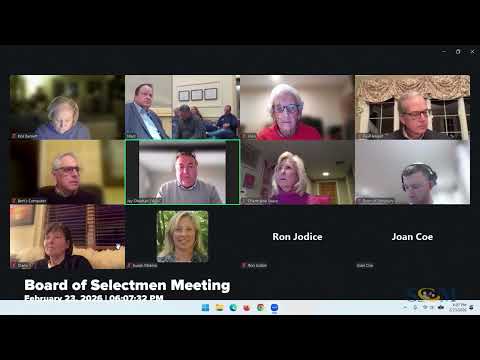
The Town of Simsbury Board of Selectmen voted Feb. 23 to continue a public hearing on the Charter Revision Commission’s draft report to March 2, after roughly an hour of in‑person and Zoom comments from residents and commission members.
Residents raised several substantive concerns and proposals. John Pico urged the board to require separation of the Conservation Commission and the Inland Wetlands Agency in the charter, citing the Connecticut Association of Conservation and Inland Wetlands Commissions’ position and research showing combined commissions often devote little time to conservation work. “Separation of these 2 entities better accommodate situations where a proposed development project is legally permissible in terms of wetlands regulations, but still undesirable in terms of conservation objectives,” he said.
Jay Sheehan, participating by Zoom, proposed several structural changes: moving to an odd number of selectpeople to avoid 3‑3 ties; considering a council‑manager form of government; and standardizing term lengths for boards and commissions. “Number 1, moving to an odd number of select people,” Sheehan said, arguing it would reduce gridlock and mirror common municipal practice.
Charmaine Seavey, chair of the Economic Development Commission, asked that the commission remain codified in the charter, saying it is active and provides unpaid professional service to the town. “If we’re taken out of the charter, the Economic Development Commission is at the whims of whatever board is elected,” she said.
Other commenters pressed the board for clearer public notifications and recordings of meetings and cautioned against broadly delegating grant‑application authority from policy bodies to the town manager without limits.
Chair moved to continue the hearing to March 2 to allow more public input and to avoid the effects of severe weather; the motion was seconded and passed by voice vote. The board said it will use the additional time to compile public comments and review them against the checklist provided to the Charter Revision Commission.
The continued hearing is scheduled for March 2 and will also include the board’s review of the town manager’s recommended budget.