
House amends employment bill that would broadly limit noncompete agreements
Get AI-powered insights, summaries, and transcripts
Subscribe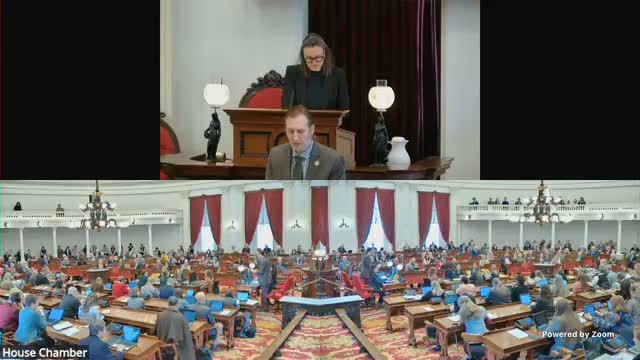
Summary
H.205 would generally prohibit noncompete agreements with specified exceptions, limit 'stay or pay' provisions, and include special protections for health care providers; the committee recommended an amendment and the House ordered third reading after debate and an interrogation about a teacher carve‑out.
The Vermont House considered H.205, a proposal to limit the use of agreements not to compete and to regulate so‑called "stay or pay" provisions. Representative Duke (member from Burlington), speaking for the Commerce and Economic Development Committee, said the bill ‘‘generally prohibits agreements not to compete, with limited and carefully defined exceptions,’’ and walked members through provisions that permit narrow exceptions for sale of a business, dissolution of partnerships, certain severance agreements, contracts permitted under SEC rules, and narrowly defined exemptions for some exempt employees.
Representative Duke described special protections for health care providers, stating that any contract that effectively restricts a health care provider from practicing in a geographic area or requires litigation in another state would be "void, unenforceable, and against public policy." The bill also restricts noncompetes for nonexempt employees under the Fair Labor Standards Act and places timing and notice requirements on permissible agreements.
During floor interrogation a member questioned an explicit exemption for contracts with teachers, citing 16 V.S.A. § 1752 and concerns the carve‑out could be misused to lock teachers into contracts. The presenter said the committee did not receive targeted testimony on that subsection and that the provision was included to clarify the bill would not conflict with the referenced statute; one member said he could not support the bill as written and would seek an amendment for third reading.
The committee recommended the amendment printed on today’s calendar; the committee vote was recorded in the committee report as "10 1 to 1" (transcript text). On the floor the question to amend was put and, by voice vote, the ayes prevailed; third reading was ordered.
The transcript shows committee testimony and stakeholder participation from credit unions, health‑care providers, banks, chambers of commerce, employers, labor groups, and state agencies.