
DEEP presses appliance‑efficiency rules and automated solar permitting as fixes to rising energy costs
Get AI-powered insights, summaries, and transcripts
Subscribe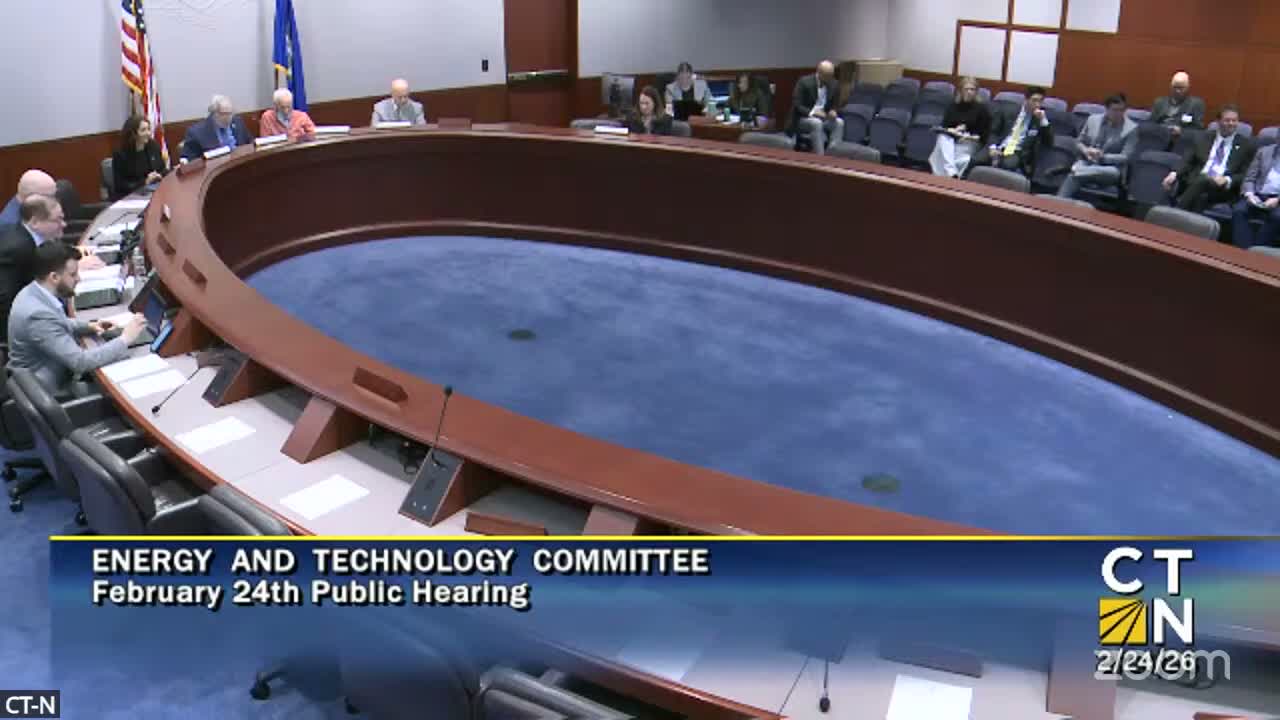
Summary
DEEP urged the Energy & Technology Committee to allow appliance efficiency standards (capped at products with five‑year payback) and to back automated solar permitting to lower rooftop solar soft costs. The department said efficiency updates and streamlined permitting can save households and businesses significant sums over time.
Representatives of the Connecticut Department of Energy and Environmental Protection told the Energy and Technology Committee on Feb. 26 that updating appliance efficiency standards and rolling out an automated solar‑permitting platform could reduce costs for households and businesses.
Commissioner Katie Dykes outlined HB 5248, which would allow DEEP to adopt appliance and water‑efficiency standards for product categories that can deliver a five‑year or shorter payback for consumers, and to reference third‑party certification procedures when drafting standards. Dykes said DEEP’s modeling shows updating product efficiency standards could cut energy and water utility costs by billions over decades and avoid some future grid build‑out costs.
DEEP’s deputy commissioner for energy, Andy Frank, and staffer Becca Treacher described the governor’s HB 5036, which would direct the Department of Administrative Services to provide an optional, automated solar‑permitting platform municipalities may use. Frank cited studies showing automated permitting can reduce permitting times by roughly 30% and cut soft costs; Treacher added that pairing standards with incentives such as EnergizeCT helps landlords and renters access efficient appliances.
Committee members asked how the proposals would affect renters and small businesses. DEEP said programs such as Conservation and Load Management and EnergizeCT offer targeted incentives that can lower upfront costs for tenants and landlords, and that the five‑year payback restriction is intended to avoid raising purchase prices above short‑term savings. The agency also said proposed permitting software would be optional for towns, whose adoption would create an easier “one‑button” path for contractors and could apply to storage if the committee requests it.
DEEP representatives and members agreed to follow up on technical questions about which product categories would be regulated, how federal preemption affects standards where federal rules exist, and whether storage should be explicitly included in automated permitting language. The committee did not take votes; DEEP offered to provide detailed lists of candidate appliance categories and further fiscal data to members.
The hearing continues with several other bills on the committee’s agenda and extended debate on water‑utility governance later in the session.